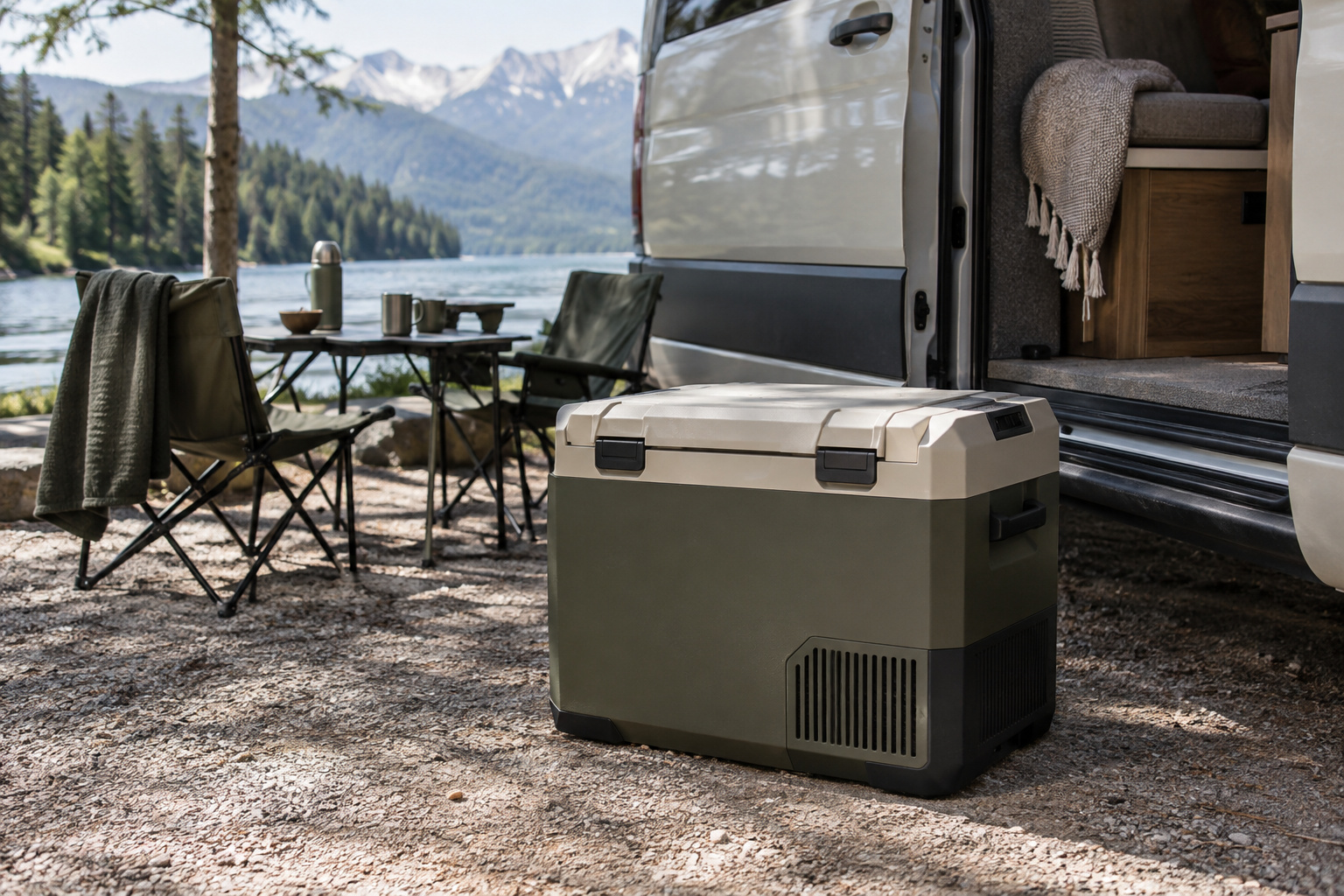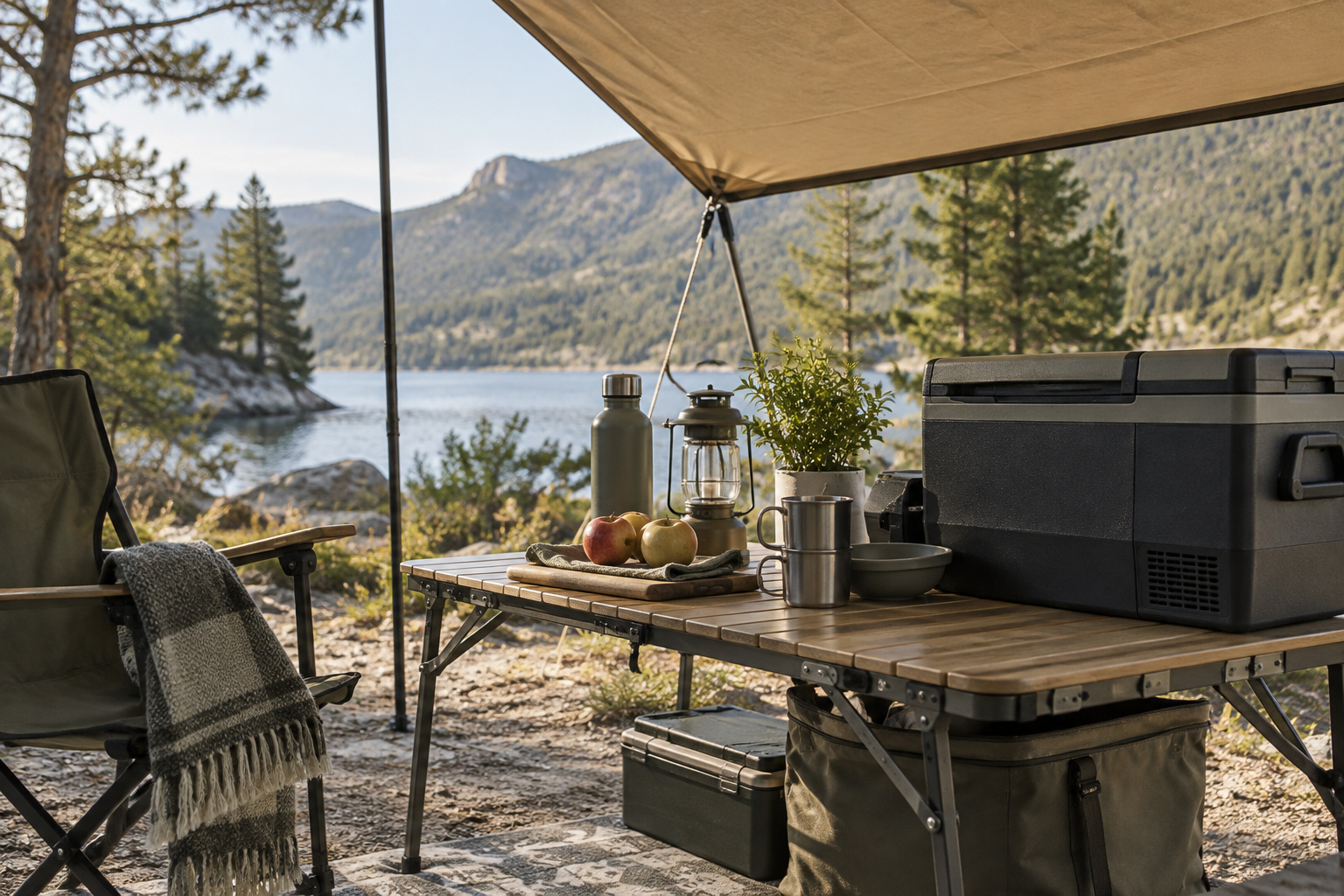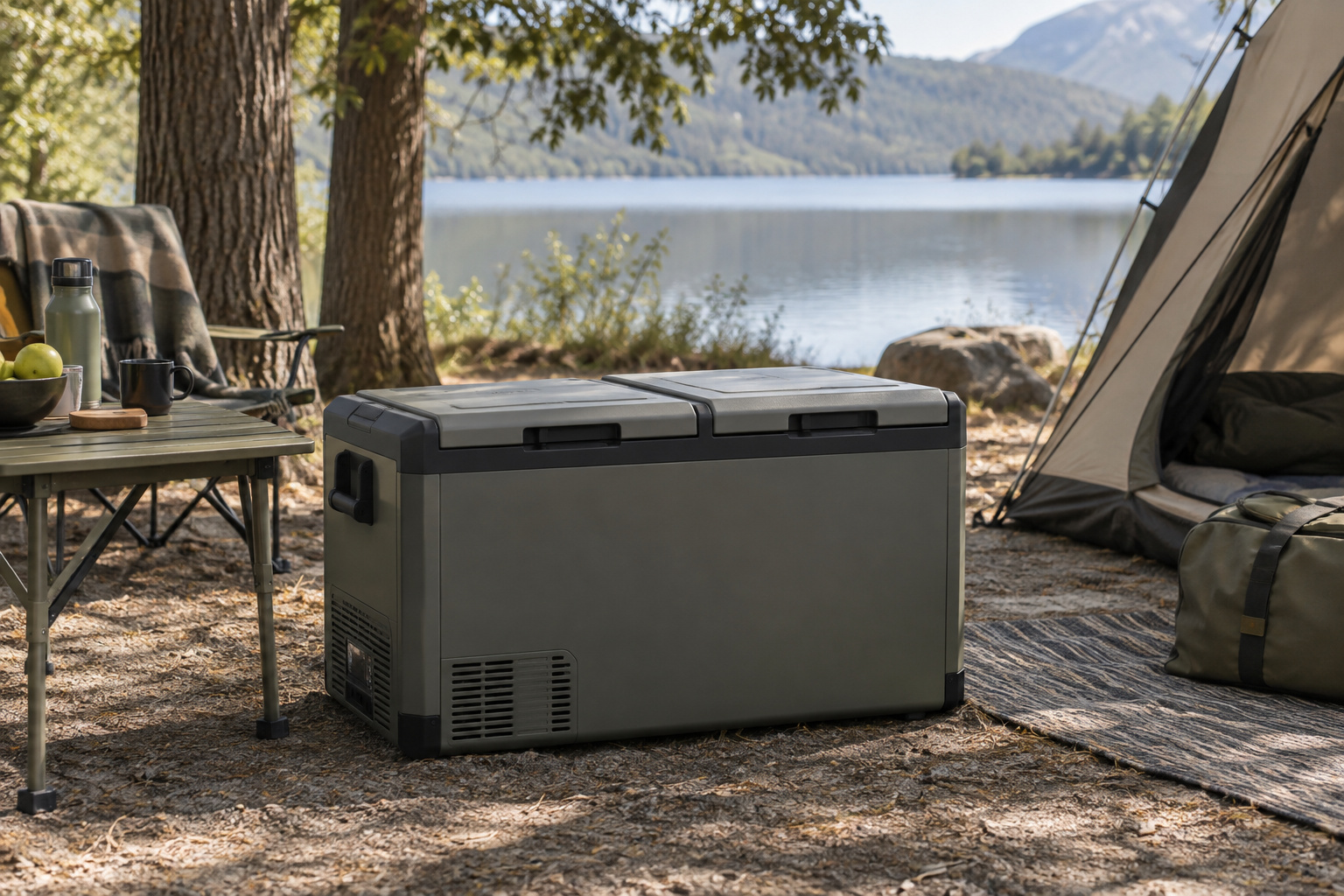
Two compartments can solve a real problem when a trip needs chilled meals and frozen food at the same time. But two spaces do not necessarily mean two independently controlled temperatures. Begin by defining what each compartment must hold, then read the exact model manual for how those compartments operate.
Define the two temperature jobs
List the contents intended for each zone. One might hold refrigerated ingredients while the other carries frozen food. Alternatively, both might be used for chilled items with different organization needs. If every item needs the same conditions, a divider or basket may solve the packing problem without making independent temperature controls a requirement.
Government guidance distinguishes refrigerator storage at 40°F or below from freezer storage at 0°F or below. These are food-storage references, not proof that a product reaches them under your conditions. Match your requirements to the exact manual and confirm the way the controls operate. Do not treat a picture of ice cream beside vegetables as a specification or a physical temperature test.
Read what dual zone actually means
Dometic documents independent compartment controls for its CFX3 75DZ example. That is a model-specific statement, not a definition automatically attached to every product using similar marketing words. Other listings may describe a divider, a removable basket or a main cooled area with an adjacent compartment. Ask whether each side has its own selectable setting and what configurations the manual supports.
Look for instructions showing the display for each compartment. Determine whether either side can be disabled and what happens when it is. If a divider is removable, check whether removing it changes operation or is even an approved arrangement. Our buying guide helps keep these questions tied to an exact model identifier rather than a product-family name.
Source: Dometic CFX3 75DZ.
Compare usable volume by zone
Total capacity is not enough. A refrigerator advertised with a large combined volume may assign much less space to the zone you need most. Write down compartment dimensions and the shape of any internal step. Compare them with your actual food containers. A tall item that fits the overall box may not fit either side once a central partition is considered.
Plan the frozen inventory separately from chilled meals. If you carry only a small amount of frozen food, evaluate whether the remaining compartment still supports the rest of your menu. If frozen storage drives the purchase, check access to that zone when the vehicle is loaded. The capacity planning guide offers a container-based method that avoids treating can count as a universal measure.
Source: Dometic CFX3 75DZ.
Understand operation after a change
Before relying on the system, learn how to select, confirm and read each zone's setting. Determine whether the visible number is the setting or a sensed temperature according to the manual. Check how mode changes and power interruptions are handled. An app can be convenient, but the physical controls should remain understandable without a phone or connection.
A change from refrigerated to frozen use is not instant evidence that the contents have reached their target condition. Avoid loading food based solely on a newly selected setting. Follow the operating instructions and monitor the relevant compartment appropriately. We have not measured pull-down times or temperature uniformity, and we do not transfer a timing claim from one size to another. Keep that uncertainty in the trip plan.
Source: Dometic CFX3 operating manual.
Budget space and power realistically
Dual-zone operation does not eliminate the practical constraints of a portable appliance. You still need exterior ventilation, room for the lid and an approved electrical supply. Different settings and loading patterns can change operation, so a single advertised power number does not describe every configuration. Do not double or halve a runtime estimate simply because one zone is switched off.
Check the manufacturer's energy documentation and its conditions if consumption matters to the plan. For physical fit, use the space planner with the complete unit dimensions, not just the combined interior volume. For the electrical path, use the connection checklist. Neither tool verifies that your battery will last until the next charging opportunity.
Source: Dometic CFX3 operating manual.
Make an interruption plan for both sides
Think through what you will do if the supply stops or a compartment behaves unexpectedly. Food temperature history matters more than how cold the cabinet feels when you return. A warm refrigerator compartment and partly thawed frozen food may require different decisions under official food-safety guidance. Do not use taste as a safety test or assume refreezing erases an unsafe temperature history.
Keep the relevant manual and food-storage guidance accessible during the trip. Label the zones in your packing notes, keep raw food contained and make temperature checks part of normal use. A dual-zone purchase is justified when the independent jobs, usable space and operating plan are clear. If those needs remain vague, return to the menu and cargo measurements before paying for a feature you may not use effectively.