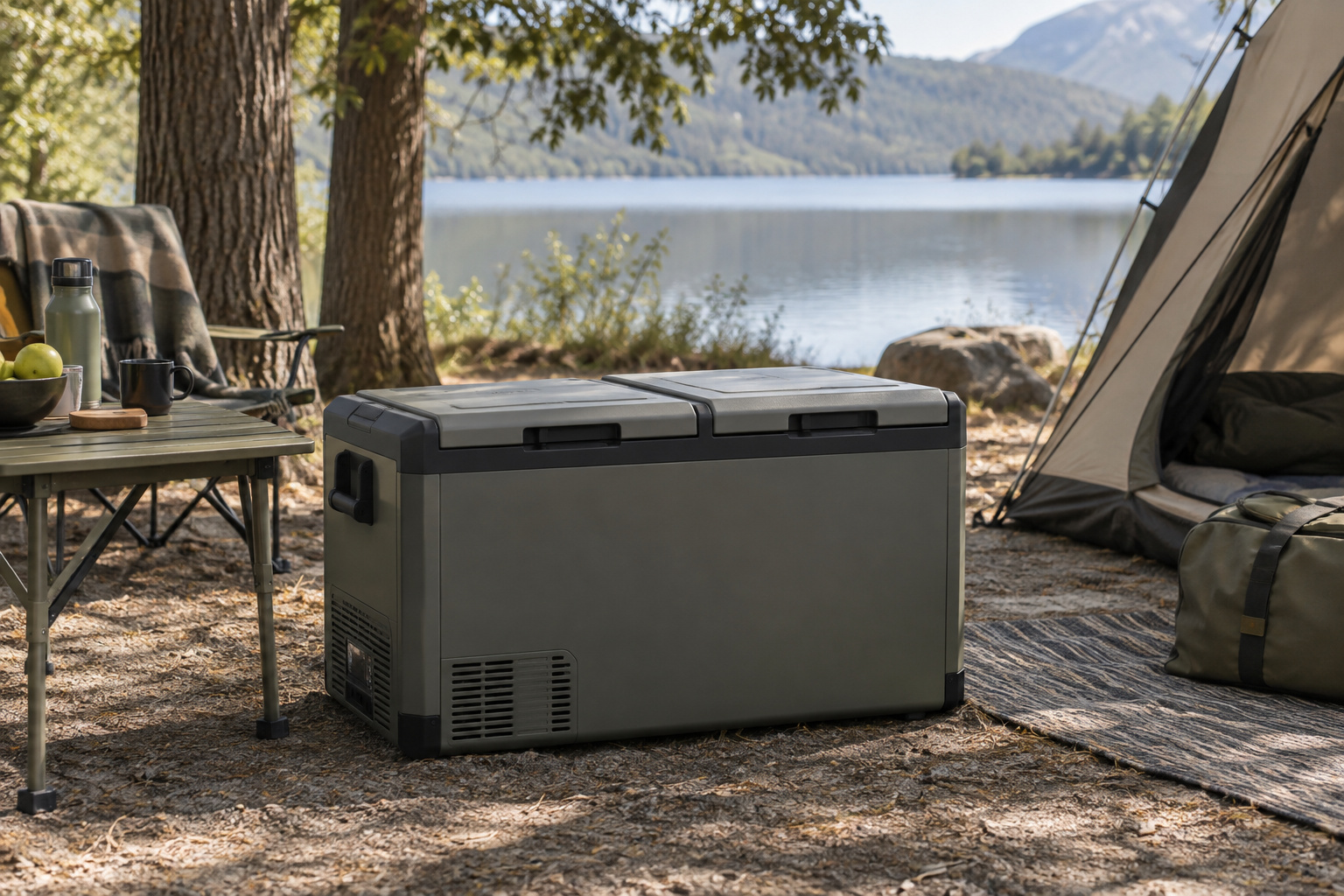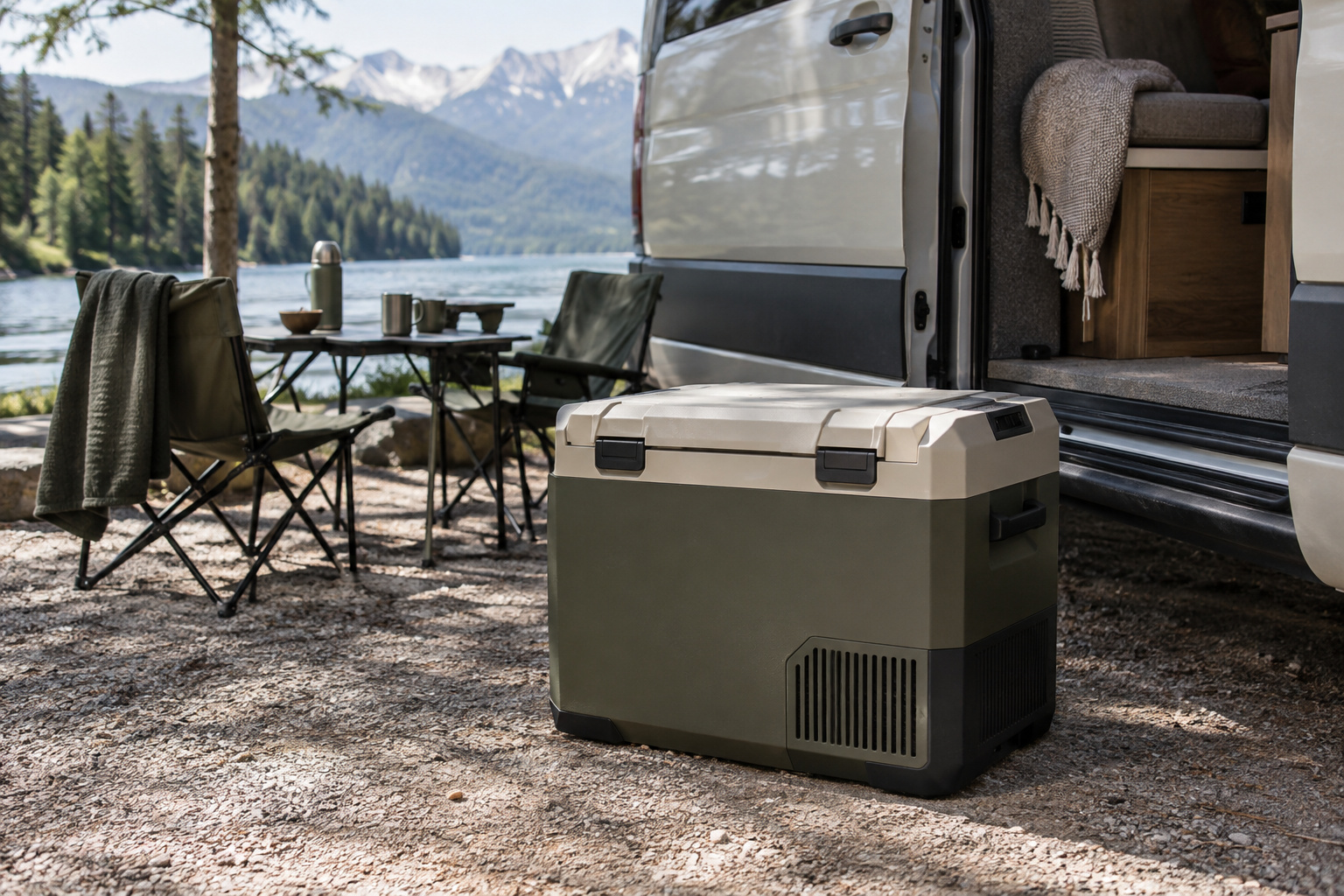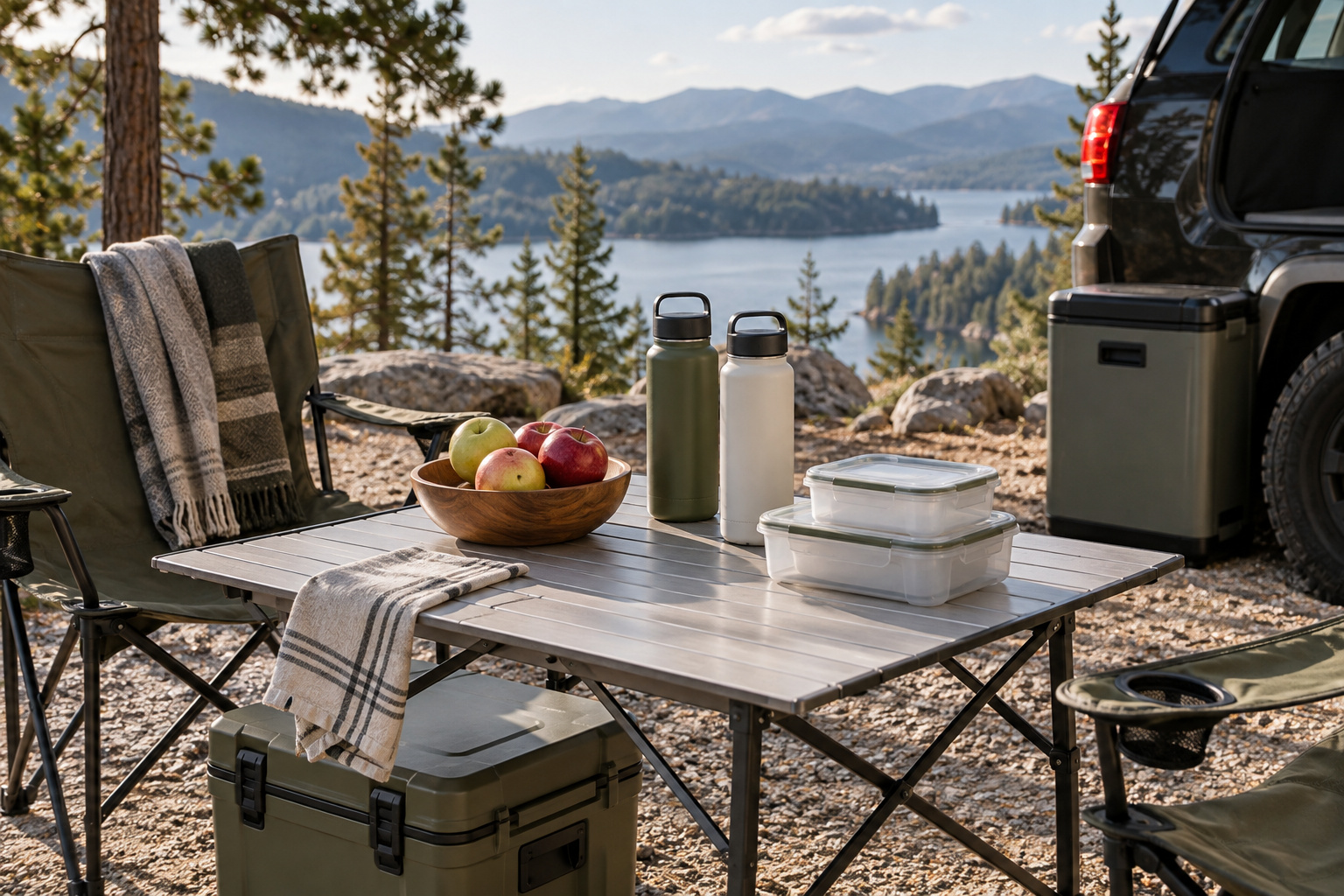
Liters, quarts and can counts describe different things. None captures the shape of your lunch containers, the height of a milk carton or the space a basket and divider occupy. A useful size decision begins with what you actually pack and how often you resupply, then checks the refrigerator interior and the vehicle exterior as separate constraints.
Start with an actual menu
Write out the food you expect between two grocery stops. Group it by meal, then identify ingredients that require cold storage. Include opened condiments, breakfast items and leftovers you realistically keep. Do not automatically allocate refrigerated space to every beverage or sealed shelf-stable item. Your menu can often solve a space problem more effectively than buying a much larger refrigerator.
Use a representative trip rather than an idealized photograph of a completely full box. A two-person weekend with a daily shop differs from a remote itinerary with several days between stops. Count containers rather than portions alone. Four lunches in rigid boxes occupy a different shape from the same ingredients packed separately. This is why our planning guidance does not prescribe a universal number of liters per person per day.
Source: Dometic choosing cooler size.
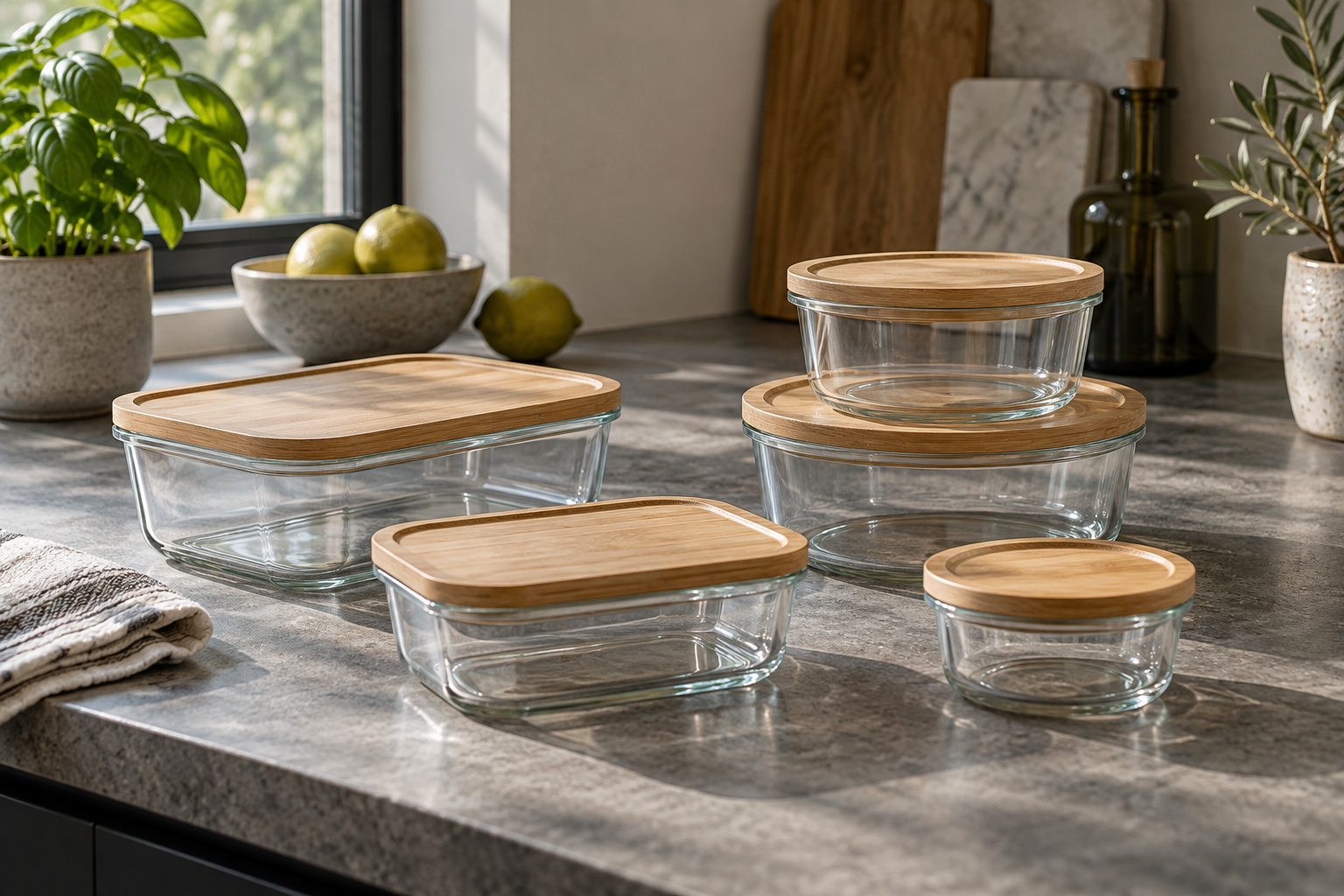
Mock up the packing layout
Gather clean examples of your usual containers and arrange them in a cardboard footprint or another safe measuring space. Measure the widest and tallest items. Note which must stay upright and which cannot support weight on top. Include separation for raw ingredients and access to items needed first. An imaginary volume calculation can miss the unusable gaps around awkward packages.
Compare this layout with the manufacturer's interior diagram when available. Pay attention to a compressor step, internal baskets and the different sizes of dual compartments. Do not assume the nominal capacity is one unobstructed rectangle. The dual-zone guide is useful if you need both chilled and frozen storage, because total volume hides how much is available at each temperature.
Source: Dometic choosing cooler size.
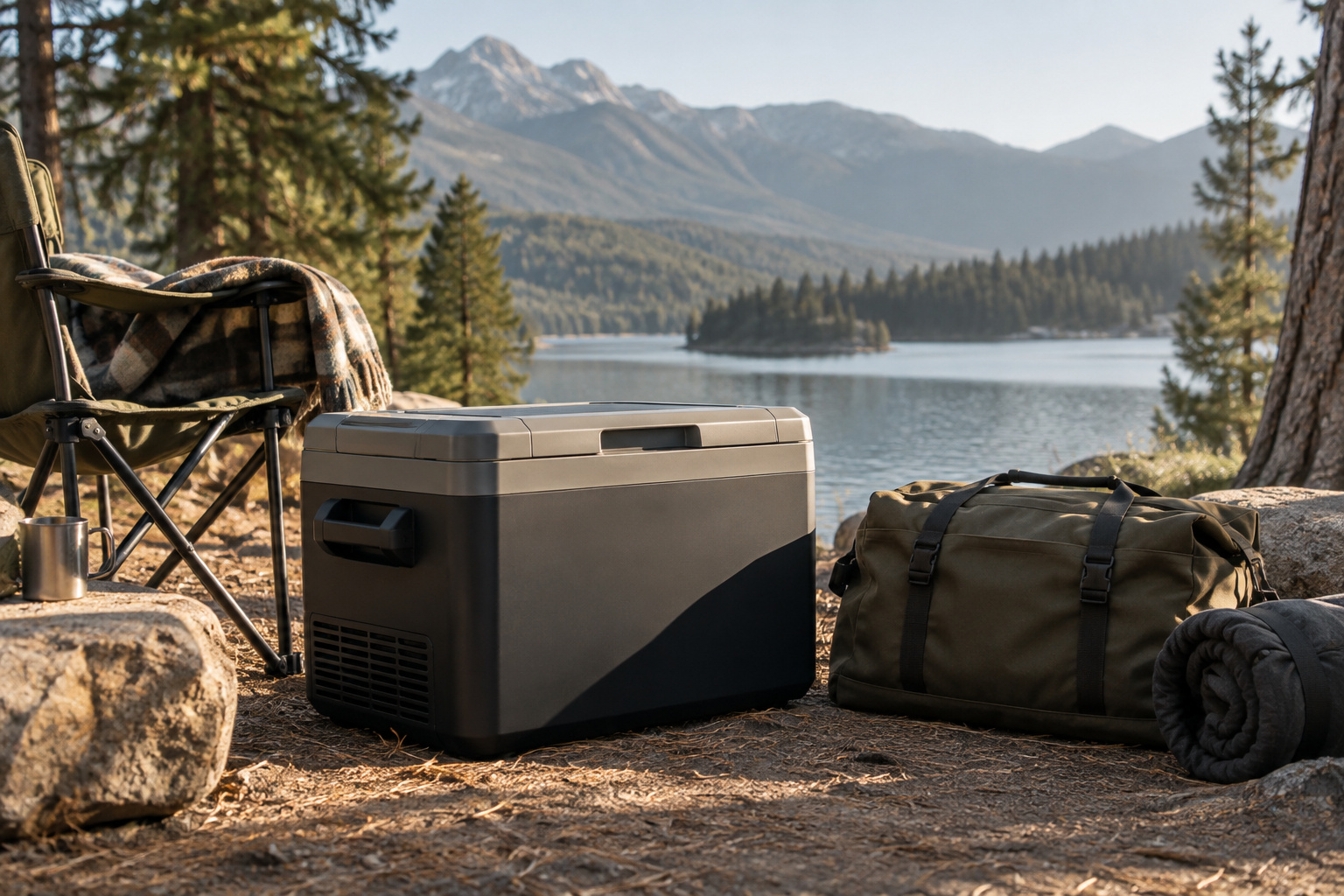
Keep exterior fit separate
A refrigerator with enough interior storage can still be unsuitable for the vehicle. Measure the cargo position, access opening and space above the lid. Handles, hinges and plugs may extend beyond the body dimensions used in a simplified product image. Record the manufacturer's complete dimensions and confirm which parts are included. Do not infer those dimensions from a model number or title.
Our fit planner compares a rectangular envelope using your inputs. Use it after reading the manual's ventilation requirements. Then check the physical location, including sloping walls, nearby luggage and whether someone can reach the bottom of the box. A mathematically positive fit result does not approve a mounting method or establish that warm exhaust air can escape.
Source: Dometic CFX3 operating manual.
Plan access through the day
Think about the order in which food leaves the refrigerator. Breakfast ingredients buried under dinner containers invite longer searching and more rearranging. Put the items needed together into a clear packing plan without blocking the lid seal or treating the interior as unlimited storage. Label containers so another traveler can find them without a full unpacking session.
Decide whether drinks need the same storage space as meals. A separate drinks strategy may reduce disruption to food containers, but it also adds another item to carry and manage. Evaluate the entire vehicle load rather than the fridge alone. The placement guide helps account for surrounding cargo and access during stops. Never sacrifice required ventilation to squeeze in one more bag.
Source: Dometic CFX3 operating manual.
Count the handling cost
Capacity changes more than the shopping interval. Consider moving the loaded unit, reaching into it and storing it when empty. Manufacturer product weight, where documented, usually needs careful interpretation: it may exclude contents and accessories. Add your own packing load conceptually when deciding who will move it and how. We do not prescribe a universal safe lifting weight.
Check whether the intended mounting location makes cleaning practical. If a drain exists, can you access it without moving the whole installation? Can a basket be removed with the lid at its available opening angle? Can the unit be dried after a trip? A modestly smaller box that works with your routine may be more useful than a larger one that is inconvenient every time you unload.
Source: Dometic CFX3 operating manual.
Choose a shortlist with clear limits
Record three separate answers for each candidate: food layout, vehicle fit and handling routine. If any answer relies on a guessed dimension, obtain the actual documentation before purchase. Compare the exact Amazon variant because a shared product page can contain multiple sizes. Keep the model identifier with your notes so a later accessory purchase does not accidentally target another version.
Finally, capacity is not a shelf-life extension. Follow the government cold-storage chart for the foods you pack, and read our temperature guide. A longer shopping interval must still fit food-specific storage limits and dependable cooling. Buy enough useful space for a defensible plan, not enough nominal liters to postpone every decision until the trip.