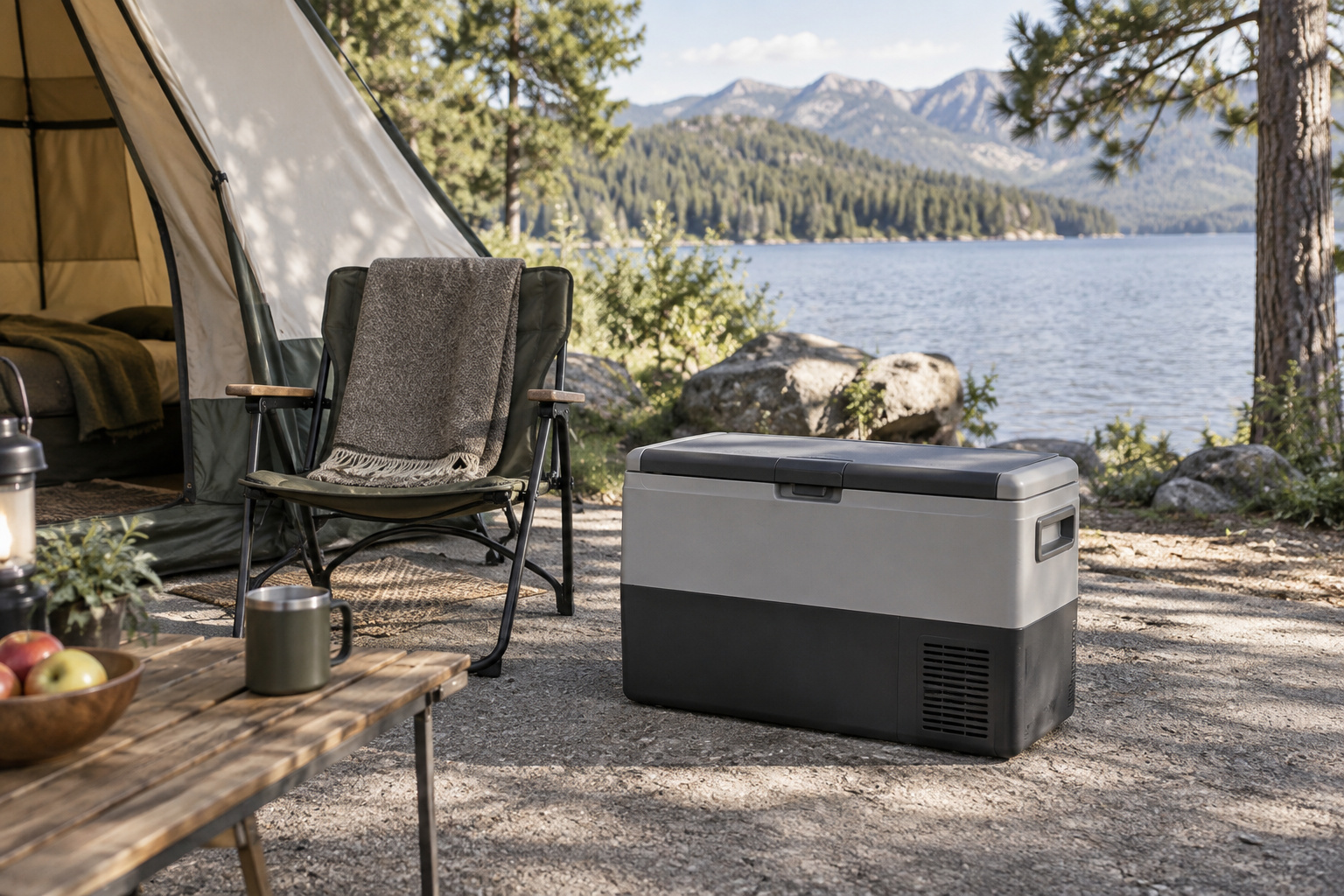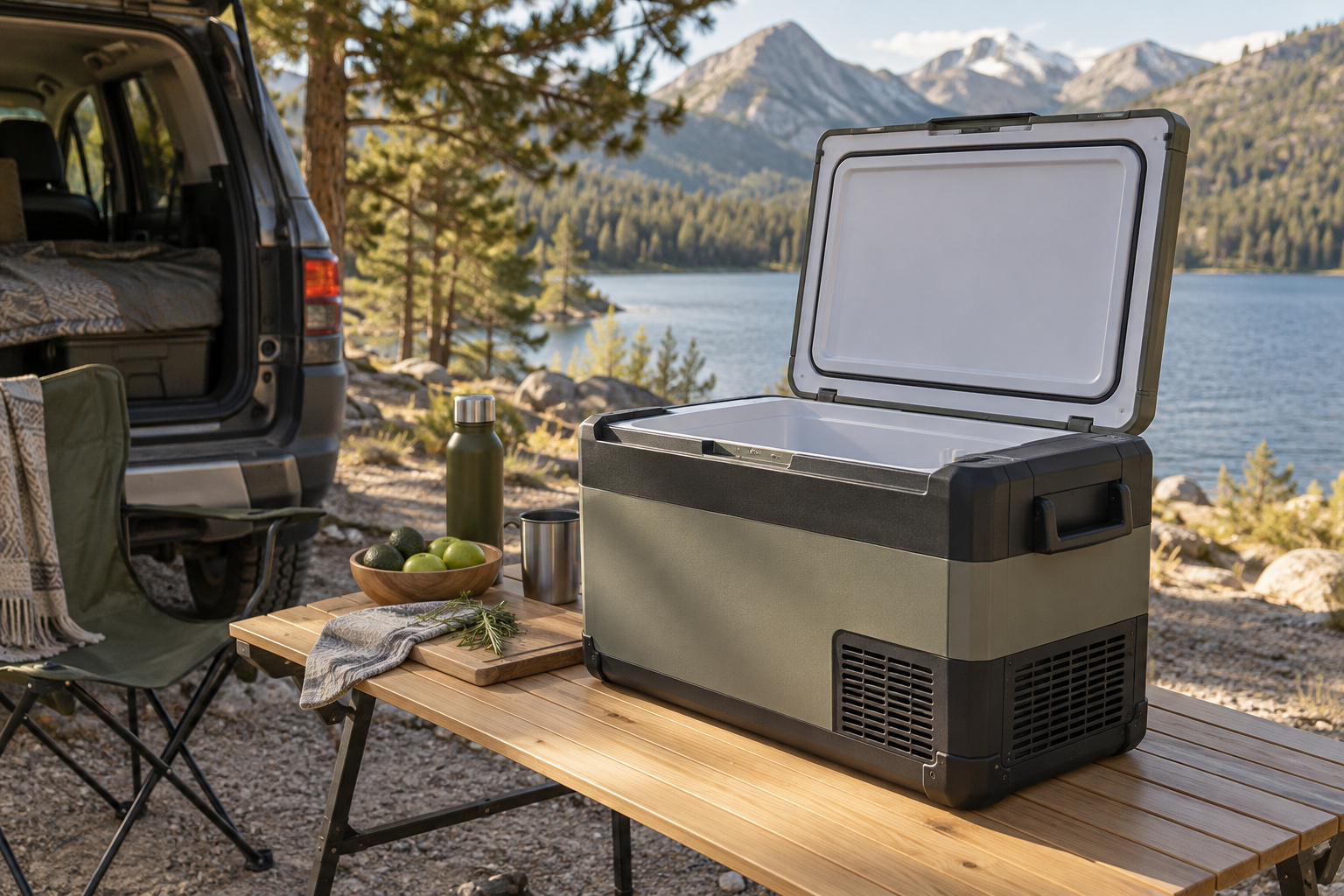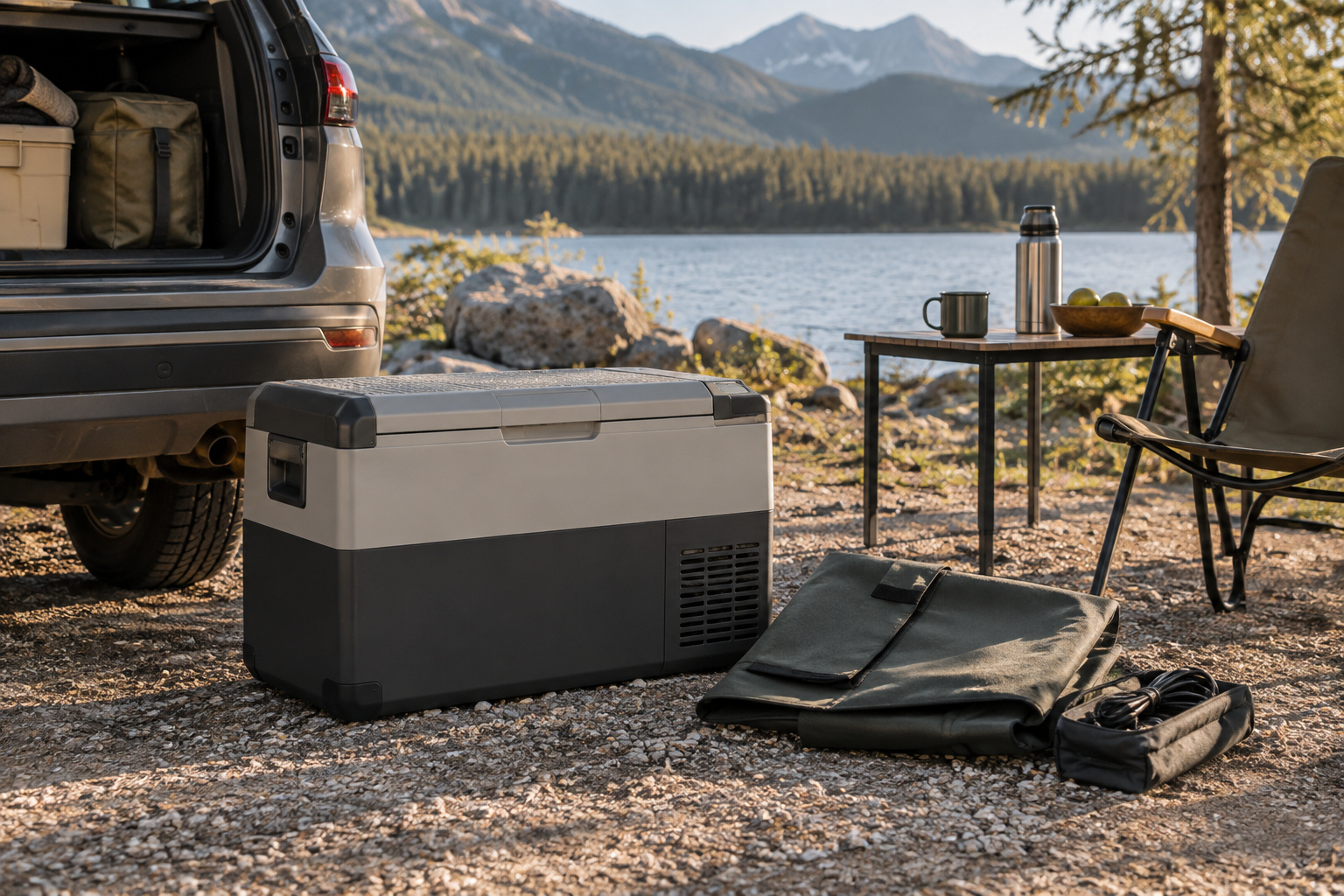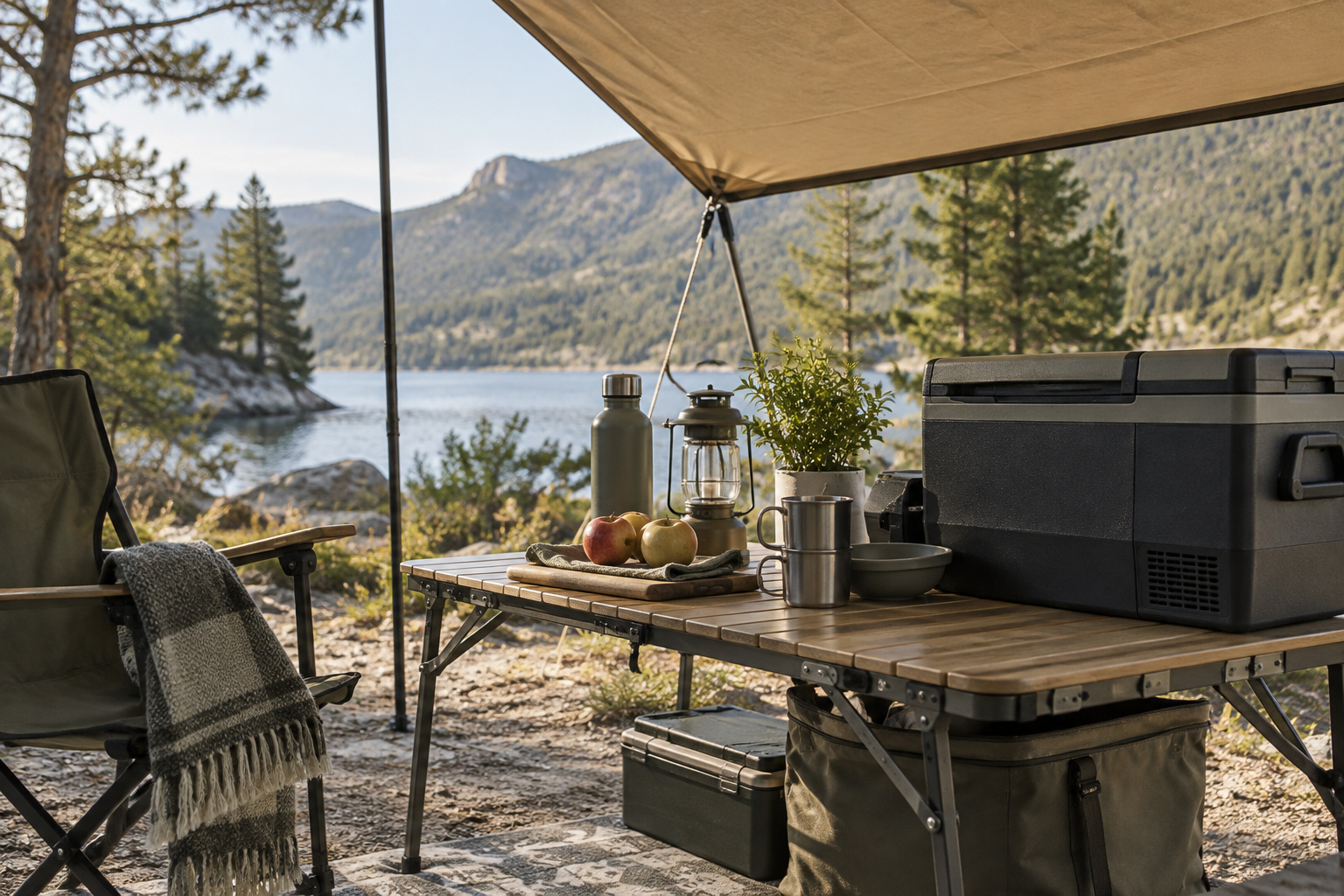
An electric refrigerator can make camp cooking easier, but it does not remove the need to manage food temperature and time. The control panel is one part of the system. Containers, packing, thermometers, preparation and what happens during a power interruption all matter. Use official guidance for the foods you carry, especially when a trip makes normal refrigeration less predictable.
Set the reference points
FoodSafety.gov lists refrigerator storage at 40°F or below and freezer storage at 0°F or below. Use these as food-storage reference points, while checking the exact appliance instructions for operation. The number you select on a controller is not necessarily the temperature of every food container. Learn what the display reports and monitor storage with an appropriate appliance thermometer.
Choose a monitoring routine you can sustain through the trip. Know where the thermometer is and how to read it without prolonged searching. An app notification can be useful, but a phone connection alone is not a complete safety plan. Keep relevant official guidance accessible if you will be offline. Our dual-zone guide explains why each compartment needs to be considered separately.
Pack to avoid cross-contamination
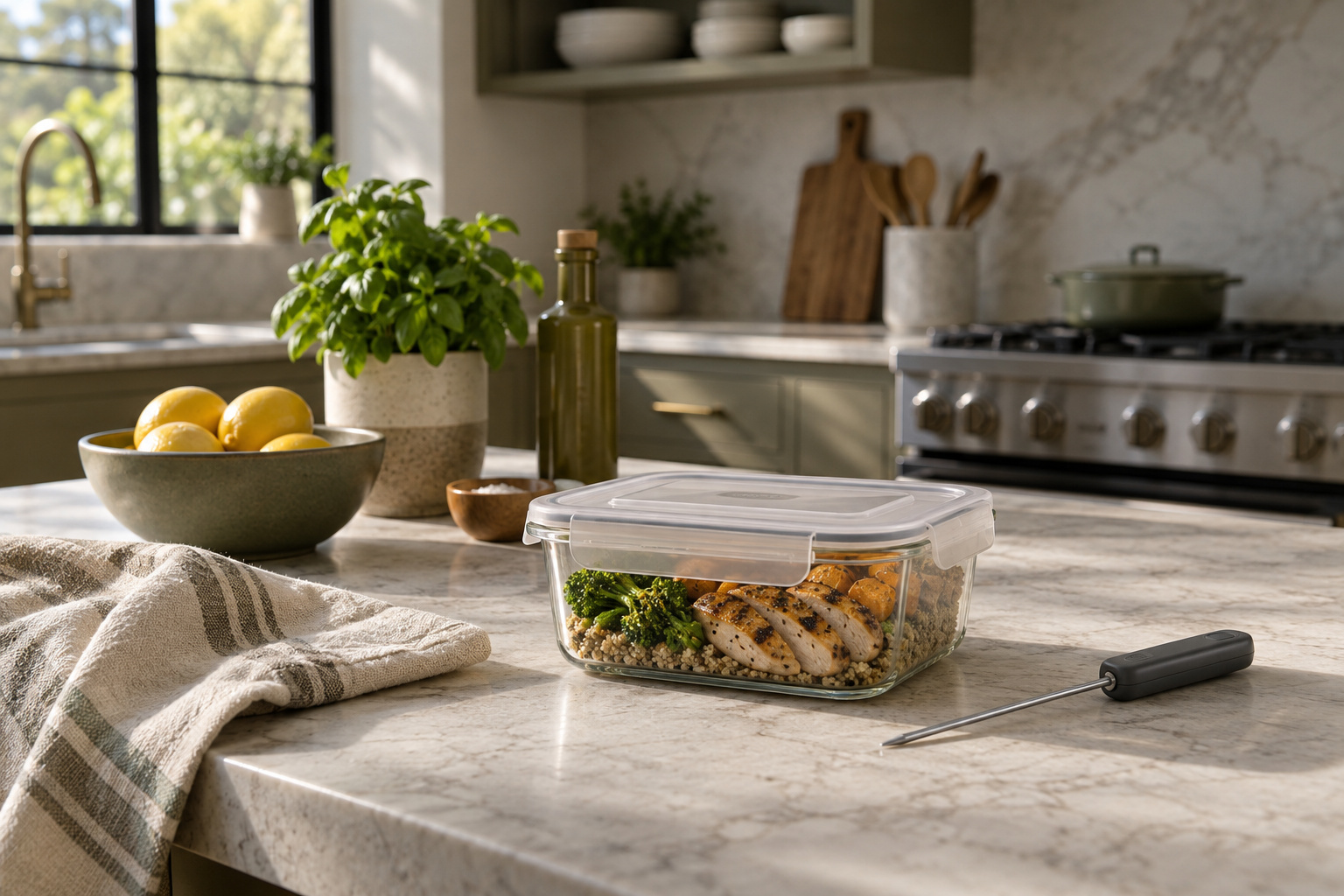
Keep raw meat, poultry and seafood contained so their juices cannot contact ready-to-eat food. Use suitable sealed containers and organize the refrigerator so items stay identifiable. The Dometic manual we reviewed explicitly addresses containing raw meat and fish; government guidance likewise separates raw foods from foods ready to eat. Do not let the convenience of a shared basket erase that distinction.
Think through preparation outside the refrigerator as well. Bring separate equipment or an effective cleaning plan for raw and ready-to-eat ingredients, and arrange access to safe water and hand cleaning. A cold storage compartment cannot correct contamination introduced during preparation. Keep this workflow simple enough for a busy campsite, particularly when several people share cooking duties and may not know how the refrigerator was packed.
Plan time outside refrigeration
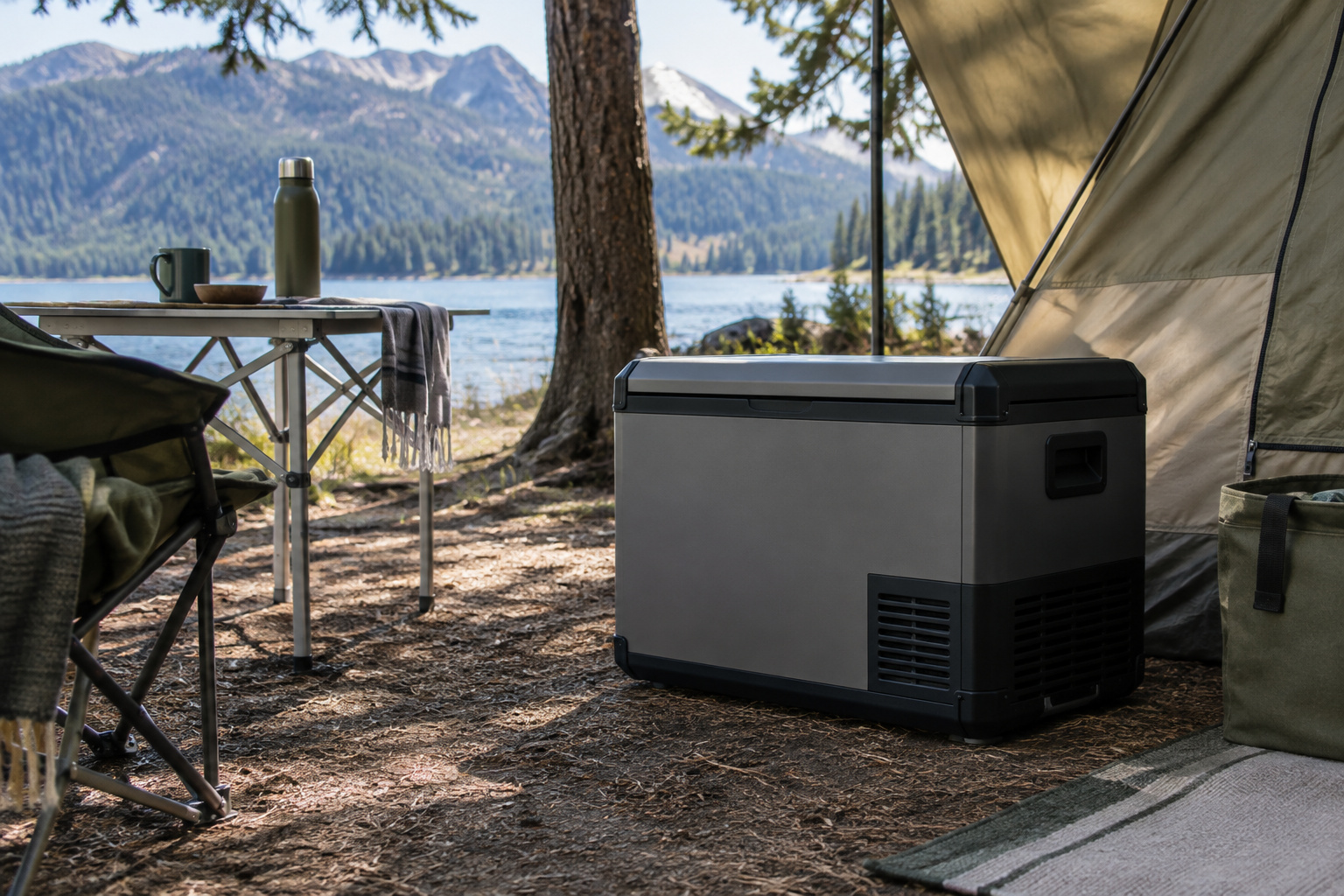
Official guidance uses a two-hour limit for leaving perishable food unrefrigerated, shortened to one hour when conditions exceed 90°F. Plan shopping, transport and serving with those limits in mind. A warm afternoon at a picnic table is not the same environment as a cool indoor kitchen. Do not use a bag that feels cool as evidence of controlled food storage.
Take out the ingredients needed for the current preparation rather than unloading the whole meal plan. Decide what will be eaten immediately and what returns promptly to cold storage. Keep track of food that has been served or handled instead of assuming it starts a new safe interval whenever it goes back into the box. For difficult cases, consult the official food-specific guidance rather than making a visual or taste-based judgment.
Follow storage times as well as temperatures
A refrigerator does not give every food the same storage life. The government cold-storage chart distinguishes food types and conditions. Use it while planning the menu and shopping interval, not only after something smells questionable. Label prepared food so you know when it was made and avoid mixing new supplies with older items without keeping that history.
Our capacity guide begins with the menu partly for this reason. Extra liters can carry more food, but they do not extend the recommended storage period. Consider resupply, shelf-stable alternatives or a different menu if the trip exceeds practical cold-storage limits. Keeping more perishable food than you can safely manage is not a benefit of a larger refrigerator.
Prepare for a cooling interruption
Know how you will notice a disconnected cord, switched vehicle outlet or protective shutdown. A refrigerator may stop without an obvious problem in the rest of the campsite. Check operation after moving the unit or changing power sources, and keep a plan for uncertain temperature history. The battery-protection guide explains why a voltage cutoff is not a food-safety alarm.
Follow official emergency guidance for deciding what to keep or discard. Do not assume that restoring power, refreezing or later cooking makes every mishandled food safe. Avoid tasting food as a test. When you cannot establish that storage remained safe, a replacement meal is a better plan than optimistic interpretation of a cold display. These decisions concern actual food conditions, not whether the appliance is still under warranty.
Make the routine easy to repeat
Create a brief checklist for loading, arrival, serving and departure. Assign someone to temperature checks if multiple travelers share the refrigerator. Keep raw-food containers distinct and place frequently needed items where they are easy to reach. After the trip, empty and clean the appliance according to its manual so the next journey starts with a known condition.
Our cleaning guide covers that equipment routine. The site has not performed physical temperature tests on the listed products, and a product recommendation is not a food-safety certification. Use the exact manual alongside public guidance and make decisions from reliable temperature and time information. A simple, consistently followed routine is more useful than a complicated plan that nobody remembers when setting up camp.