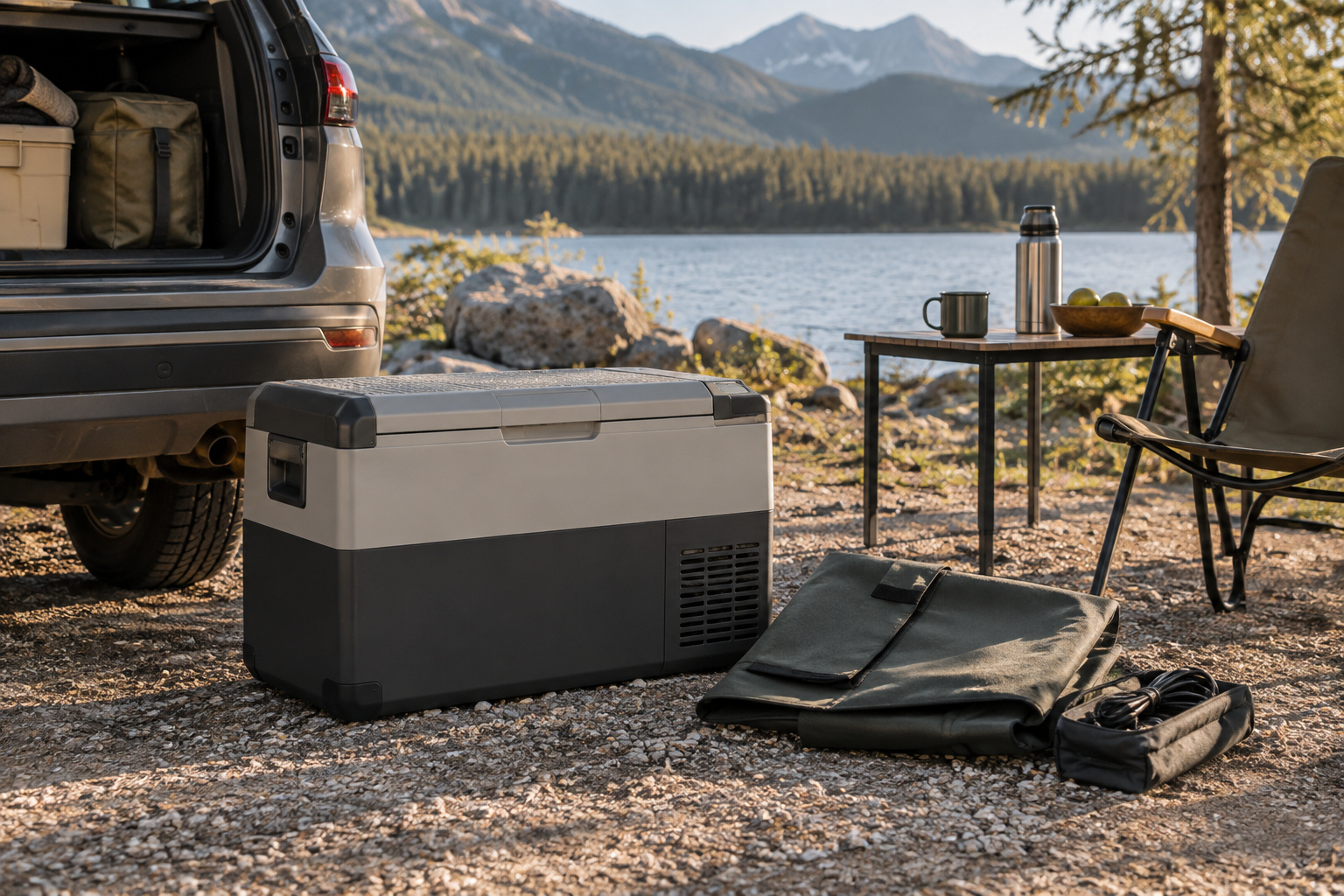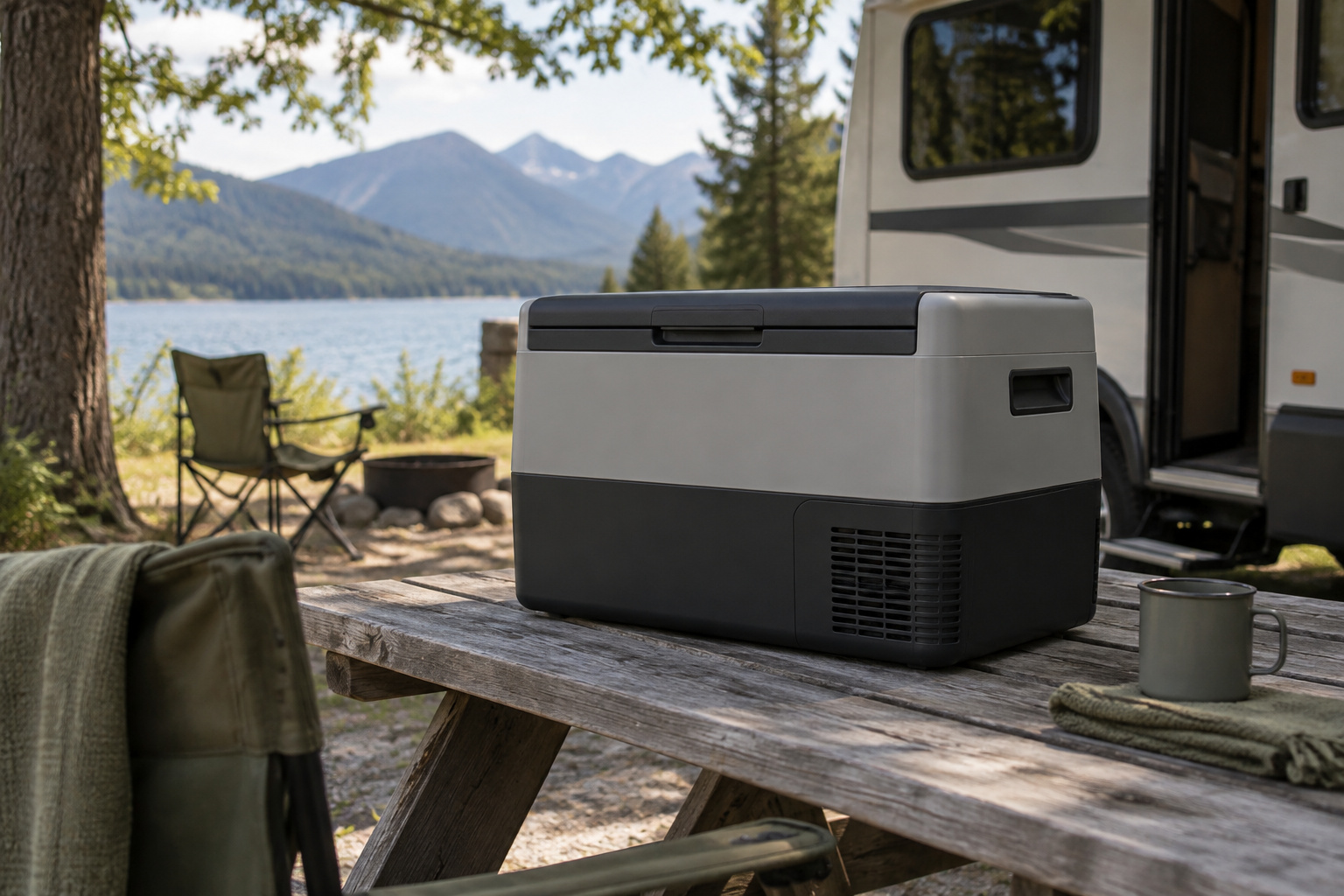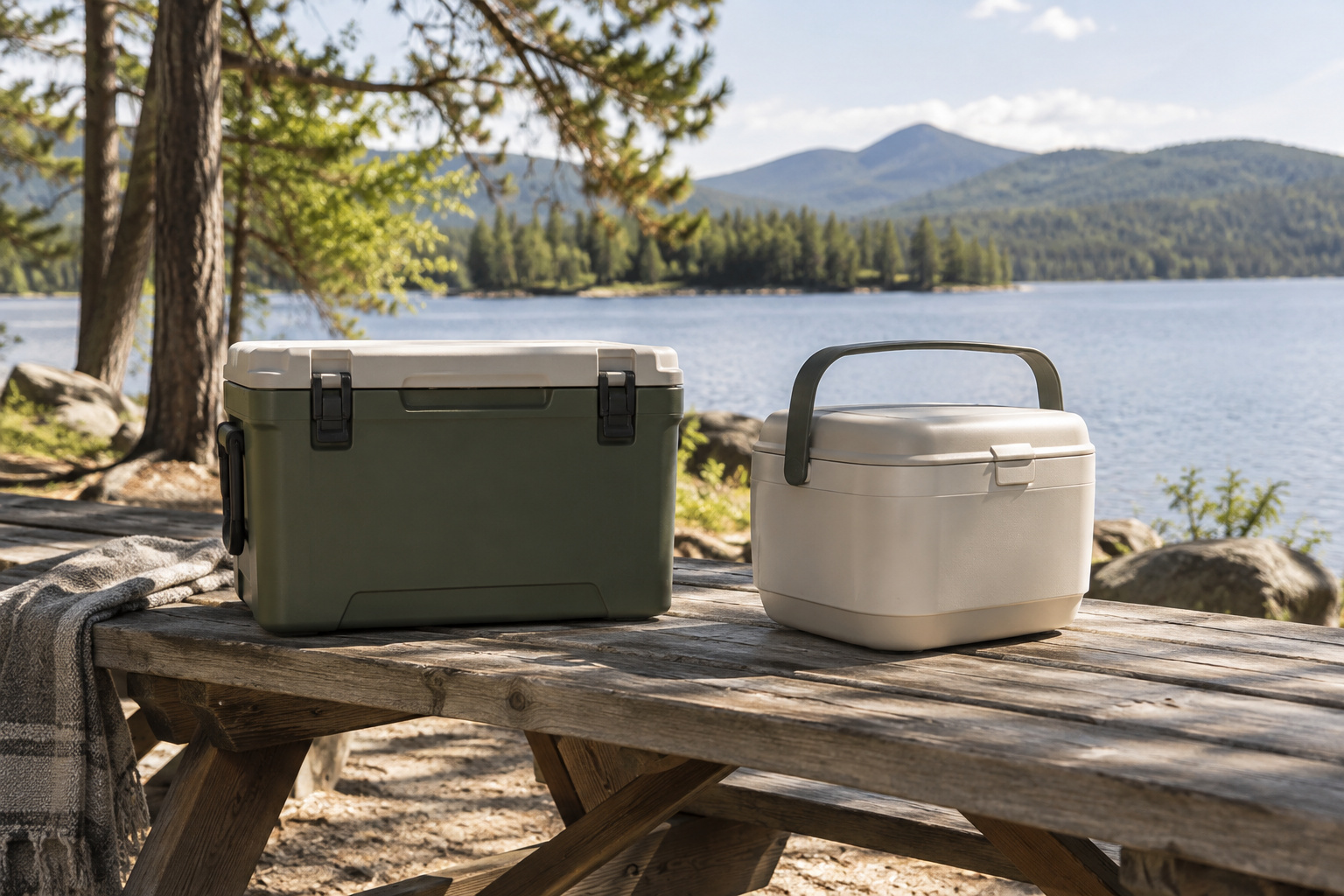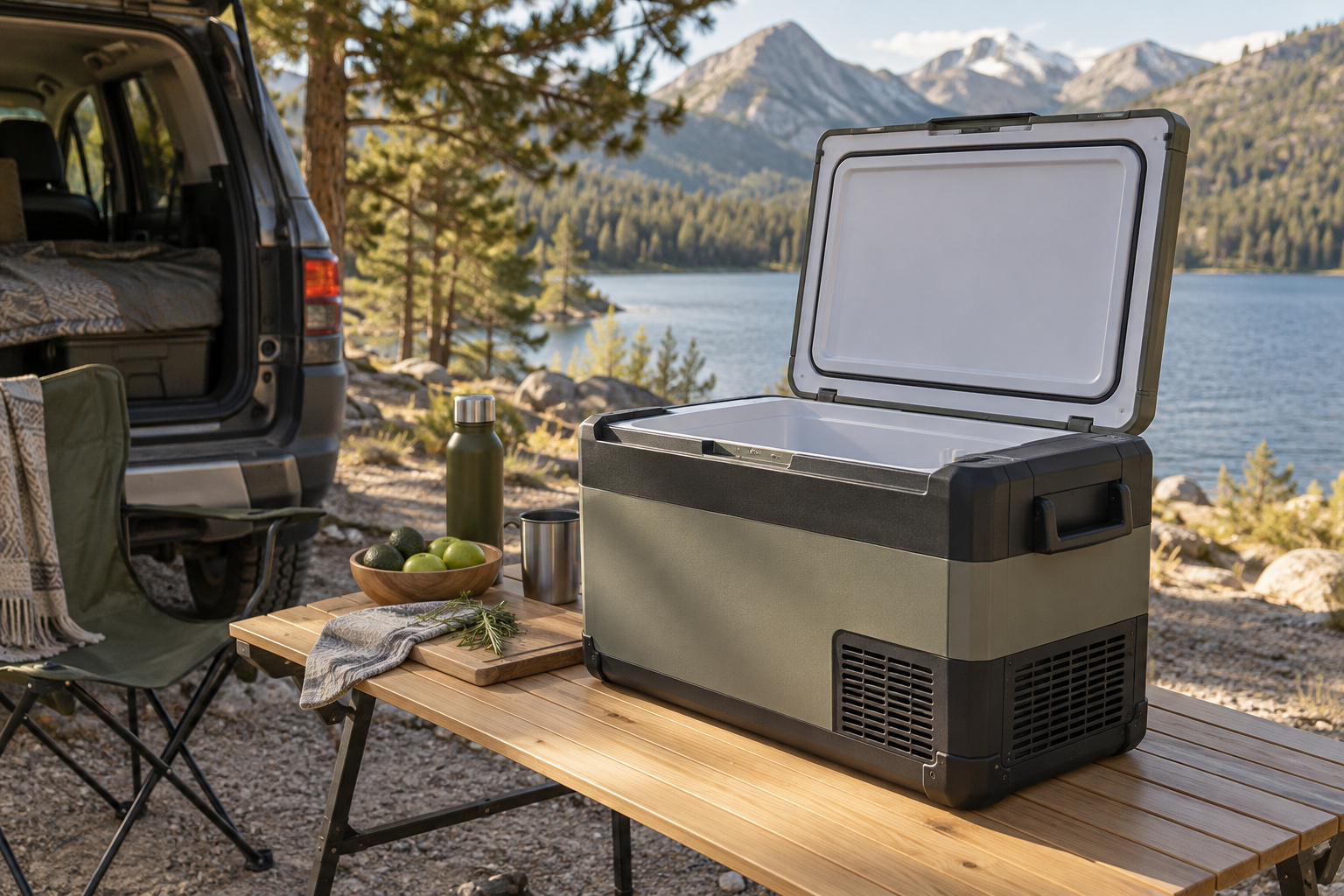
Cleaning a portable refrigerator is both a food-storage task and an appliance-care task. The interior needs attention after spills and trips, while electrical components and ventilation openings require care that differs from washing an ordinary cooler. Start with the exact manual. Do not assume a drain plug means the entire powered appliance can be hosed out or immersed.
Prepare before cleaning
Move food to suitable storage and switch off and disconnect the refrigerator as its instructions require. Keep track of perishable items while the appliance is unavailable; cleaning does not suspend food-storage limits. Clear a workspace where baskets and other removable parts can be handled without leaving the refrigerator exposed to unsuitable conditions.
The Dometic CFX2 cleaning instructions we reviewed explicitly require disconnection before maintenance and warn against running water or immersion. They are a useful example of the distinction between a powered refrigerator and a simple ice chest. Your own model may provide different details about removable components and drains. Read those instructions before selecting a cleaning method rather than assuming all portable boxes tolerate the same treatment.

Separate removable parts from the appliance
Remove baskets or dividers only where the manual permits and note how they fit back into place. Photographing the arrangement for your own reference can help avoid incorrect reassembly. Check whether those parts have separate care instructions. Do not put components in a dishwasher unless the manufacturer expressly allows it for that component.
Inspect food containers separately. A clean refrigerator cannot compensate for a leaking package that immediately soils it again. Replace damaged food-storage containers and organize raw ingredients so they cannot drip onto ready-to-eat items. Our food-temperature guide covers separation and handling. Keep appliance cleaning and safe food handling connected, while respecting that different surfaces and materials may need different approved procedures.
Source: Dometic CFX3 operating manual.
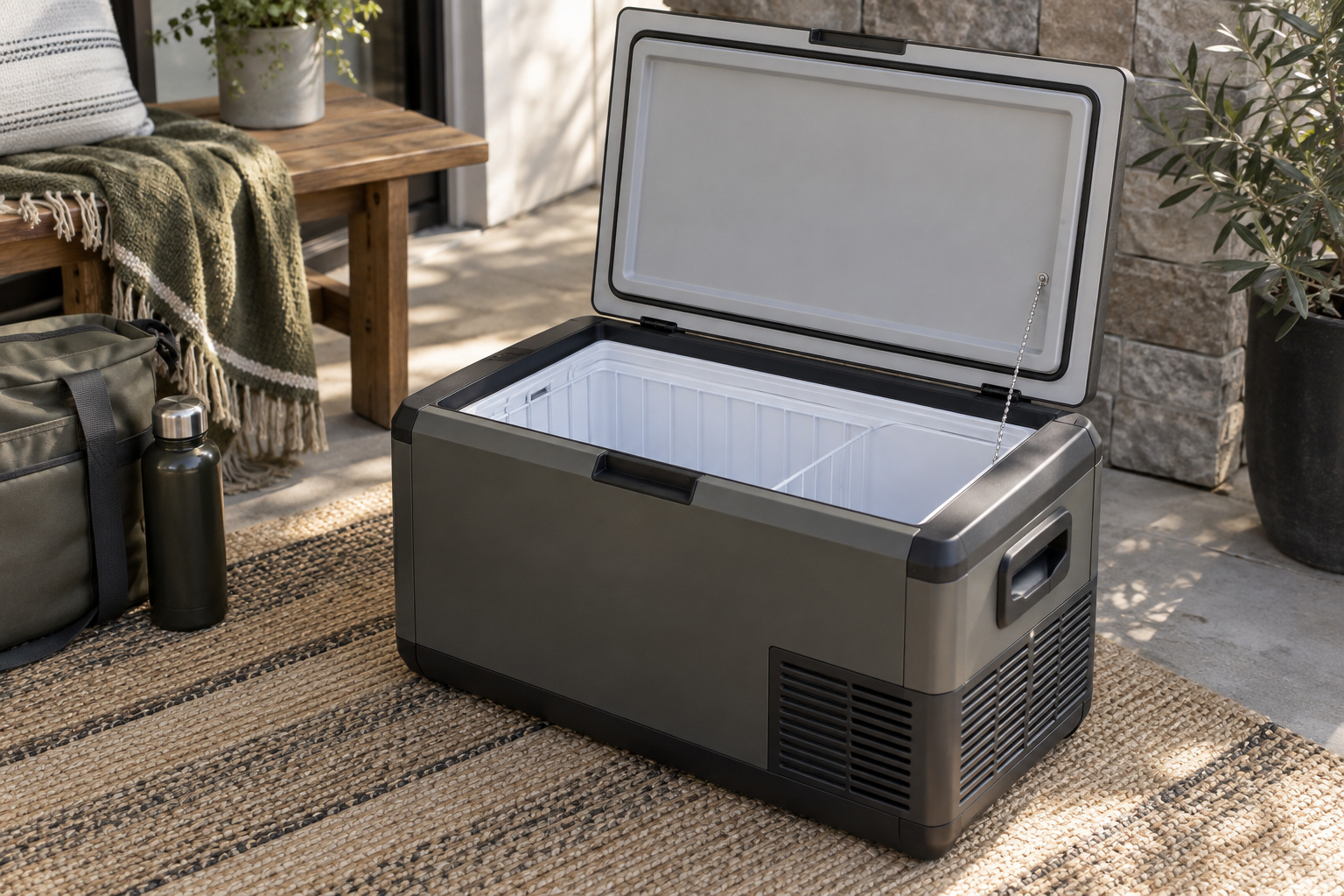
Use the documented cleaning method
The reviewed manufacturer instructions call for a damp cloth and advise against abrasive cleaners or hard objects. That supports gentle cleaning of the stated appliance family, not an invented universal chemical recipe. Follow your own manual's cleaning-agent guidance, particularly around seals, plastics and control surfaces. Do not mix cleaning products or assume a stronger concentration is better.
Work on accessible surfaces without flooding electrical areas. If a residue or odor persists, consult the manufacturer before using a method that is not described. Avoid scraping ice with sharp tools or accelerating defrost with an improvised heat source. The manual should define the defrost procedure where relevant. We do not prescribe an unverified disinfectant dilution for every portable fridge material or treat a cleaning wipe as proof of sanitation.
Inspect the seal and vents
Check the lid contact area for food particles or packaging that could interfere with closure. Clean accessible seal surfaces using the approved method and inspect for damage. Do not force a distorted seal back with tools or apply lubricants without instructions. A latch that feels closed is not evidence that the entire sealing surface is unobstructed.
Manufacturer guidance also emphasizes keeping air inlets and outlets free from dust and dirt. Clean accessible exterior areas without pushing debris into machinery or removing service panels. If you see damage or a problem beyond routine maintenance, use the support process. The placement guide helps prevent luggage and covers from undermining an otherwise clean ventilation path during the next trip.
Dry and store according to the manual
The reviewed CFX3 manual tells owners preparing for a long empty period to switch off, defrost, clean and dry the appliance, and leave the lid open to discourage mold. Apply your exact model's storage instructions and choose a location that protects the unit and cable. Make sure the storage arrangement is also appropriate for children and household access.
Store approved cords where they remain identifiable and protected from damage. Keep adapters and small removable parts with the model information rather than mixing them into a box of similar-looking accessories. Our compatibility guide explains why a connector's appearance is insufficient. Proper storage should make the next setup clearer, not leave you guessing which cable belongs to which appliance.
Source: Dometic CFX3 operating manual.
Build a repeatable return-from-trip routine
Empty the fridge promptly, deal with food according to its storage history, then complete cleaning and drying before putting the unit away. Record any unusual behavior noticed on the trip while it is still fresh: damaged latch, repeated shutdown, abnormal connection heat or unexplained temperature issues. Resolve those separately rather than hoping cleaning alone repaired them.
Before the next departure, inspect the accessible parts and follow the startup instructions. Confirm that baskets, seals and cables are in their intended positions and that the chosen vehicle location still provides the required space. Read the ownership checklist if a persistent cleaning difficulty suggests the original setup needs reconsideration. This guide describes a research-based routine; it does not claim that we cleaned, disinfected or tested the catalog products ourselves.
Source: Dometic CFX3 operating manual.