
Renee Castillo, Senior editor
I'm the senior editor here, which mostly means I'm the one who says no. No to a fridge that made a list only because it's on sale this week. No to a freezer claim the manual quietly ties to a mild ambient temperature. No to a ranking nobody has opened since the prices moved.
Most days I have three things open side by side: the spec sheet, the owner's manual and the buyer reviews. When a listing says 45 quarts, I go looking for the interior dimensions, because the compressor step can take a real bite out of the floor and decide whether a two-liter bottle stands up. When owners keep describing the same thing (a lid seal that gives up, a display that reads warmer than their own thermometer, a fan that gets loud at night), I write it down and it ends up in the ranking notes.
I write the guides on choosing a fridge, compressor versus thermoelectric, capacity and dual zones, and I edit most of the others.
If a fridge drops out of a list, there's a reason, and it's usually written right there in the notes. We read, we compare, and we keep the lists current.
Areas of expertise
- Compressor vs. thermoelectric cooling
- Sizing: quarts, liters and usable space
- Single and dual-zone layouts
- Keeping the rankings current
How I work
- I start from the manual and the spec sheet, not the listing title. If a claim isn't in either, it stays out of the ranking.
- I read the one- and two-star reviews first, then the good ones, and look for the problems that keep coming back.
- Interior dimensions beat quart numbers. I check both before calling a fridge big enough for anything.
- When a price moves or a model disappears, the ranking gets checked again before the next update.
Articles by Renee Castillo
Written
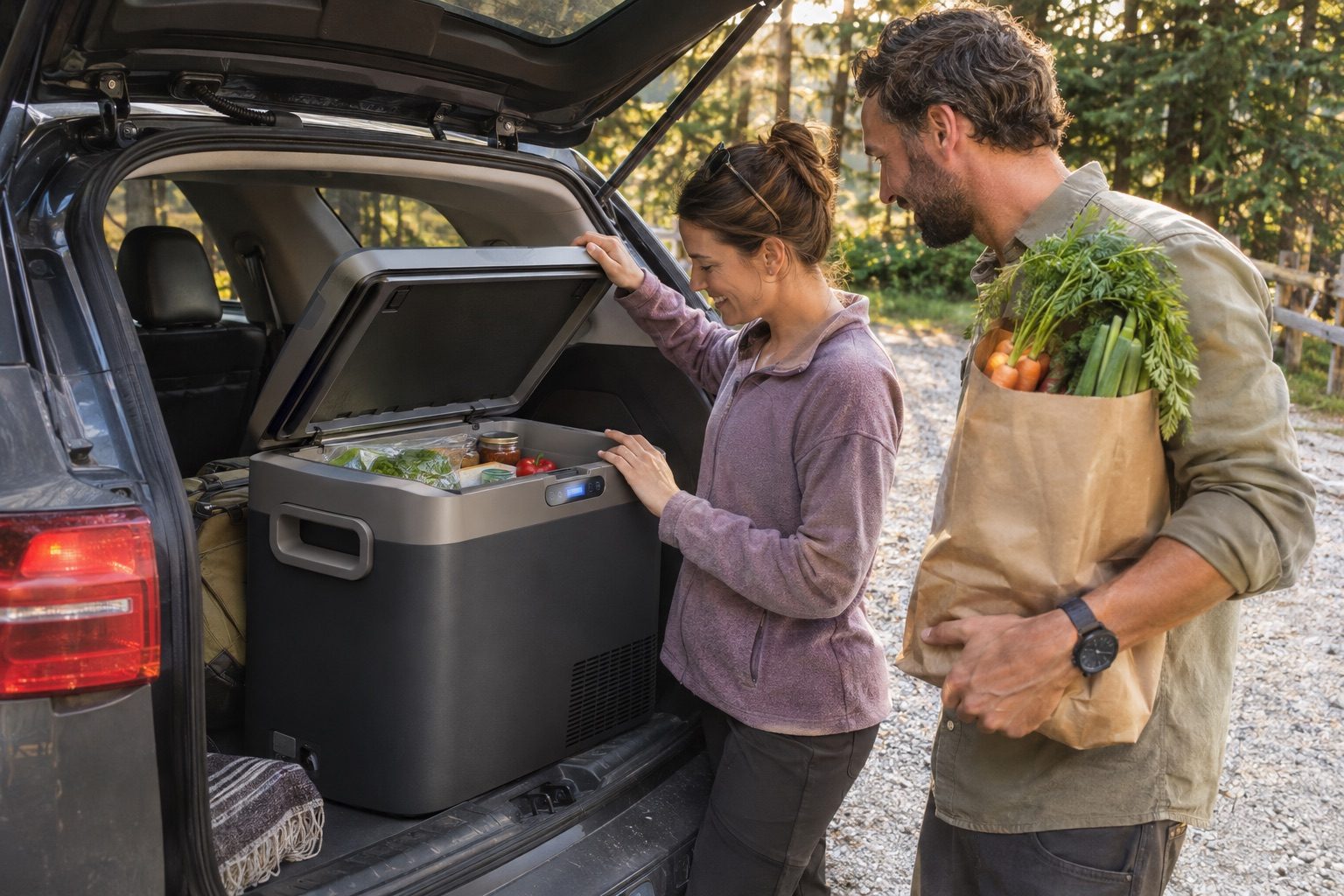 Portable refrigeration
How to choose a 12V fridge for the way you travel
Build a refrigerator shortlist around food, vehicle space, operating conditions and exact power connections.
Read the guide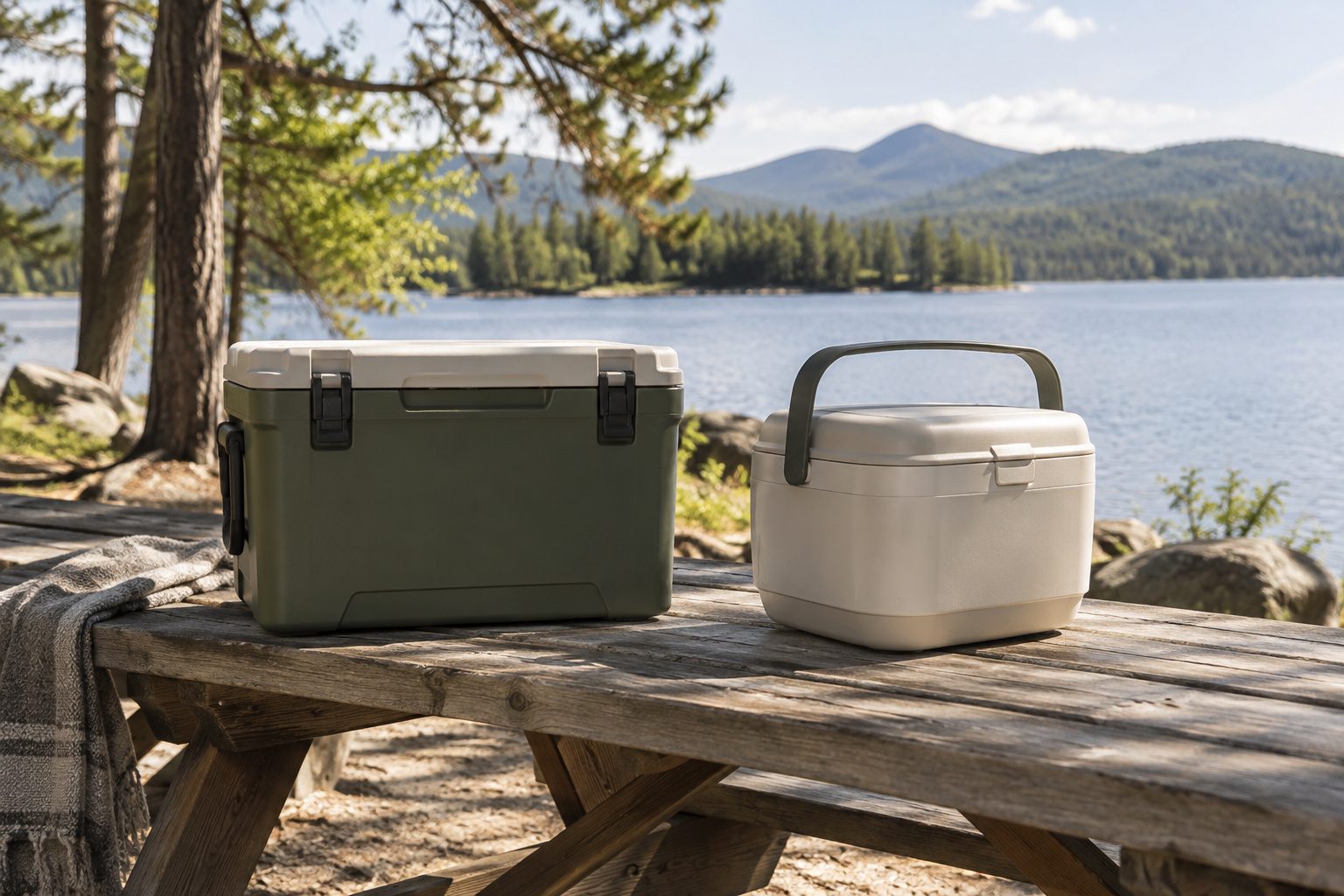 Portable refrigeration
Compressor vs. thermoelectric coolers: what changes
Understand ambient-dependent cooling, selectable temperatures and the evidence to request before storing food.
Read the guide Portable refrigeration
Portable fridge capacity: plan meals and usable space
Translate meal containers, shopping intervals and cargo measurements into a practical capacity shortlist.
Read the guide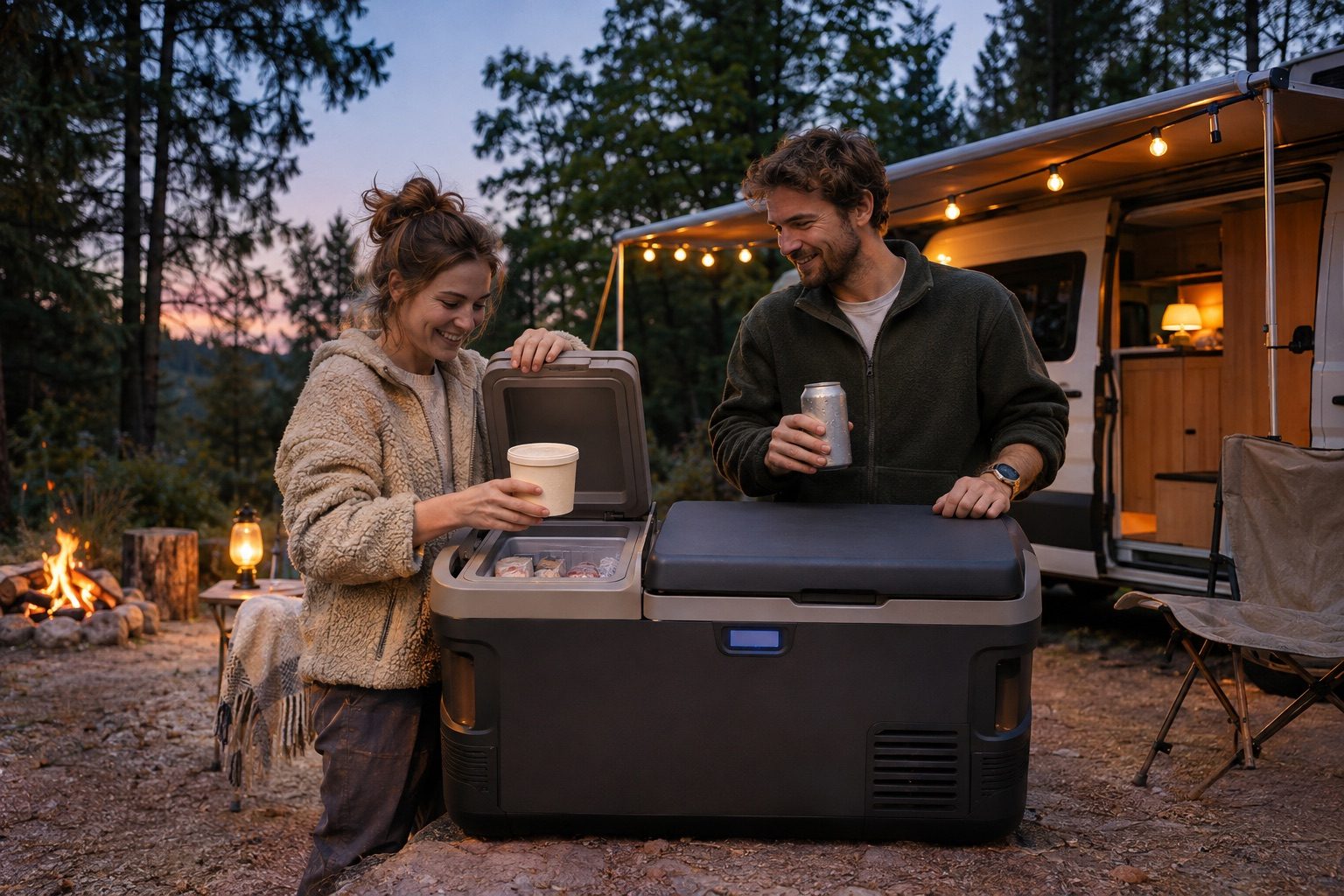 Portable refrigeration
Dual-zone portable fridges: what to verify
Separate independent temperature control from dividers, baskets and ambiguous dual-zone marketing.
Read the guideEdited
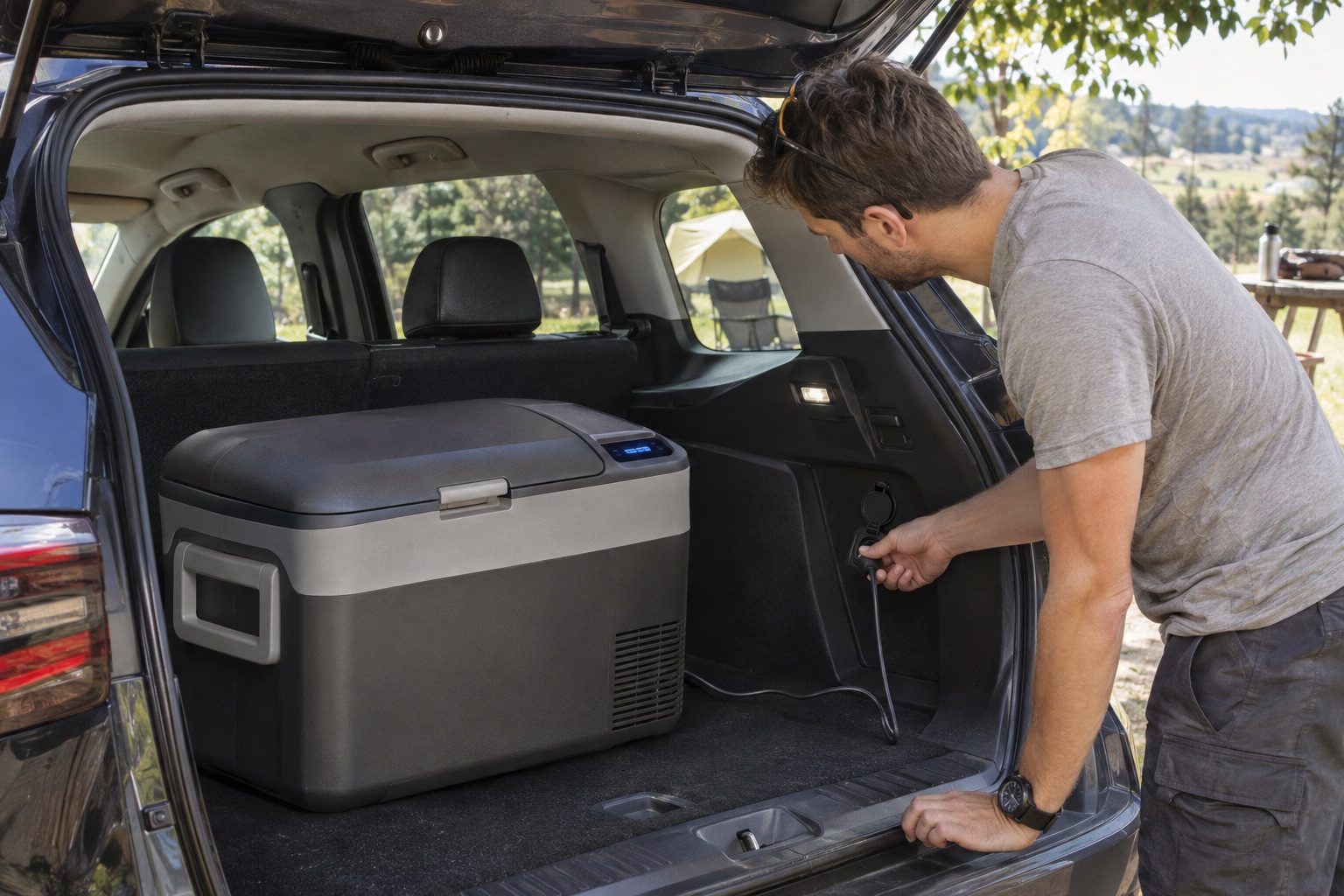 Portable refrigeration
12V fridge power connections: a model-specific checklist
Check the source, outlet, approved cable and interruption behavior before connecting a portable refrigerator.
Read the guide Portable refrigeration
Portable fridge battery protection: what a cutoff tells you
Understand low-voltage shutdown without confusing it with state of charge, starting reliability or food safety.
Read the guide Portable refrigeration
Camping food temperatures: monitor the food-storage system
Plan cold storage, separation, serving time and power interruptions using government food-safety guidance.
Read the guide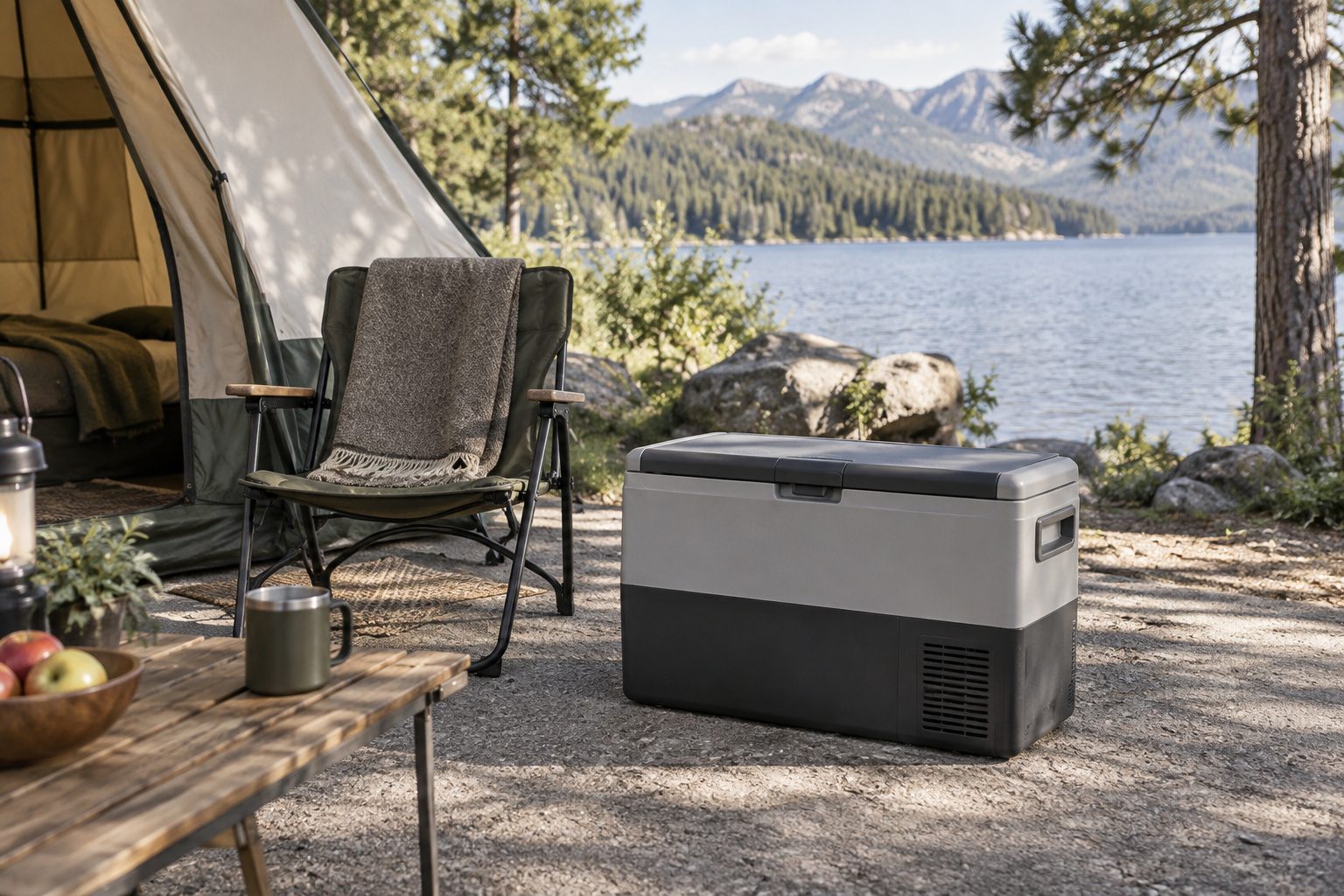 Portable refrigeration
Portable Fridge Placement: Ventilation and Access
Check the installed envelope, airflow path, lid movement and cable route before loading the vehicle.
Read the guide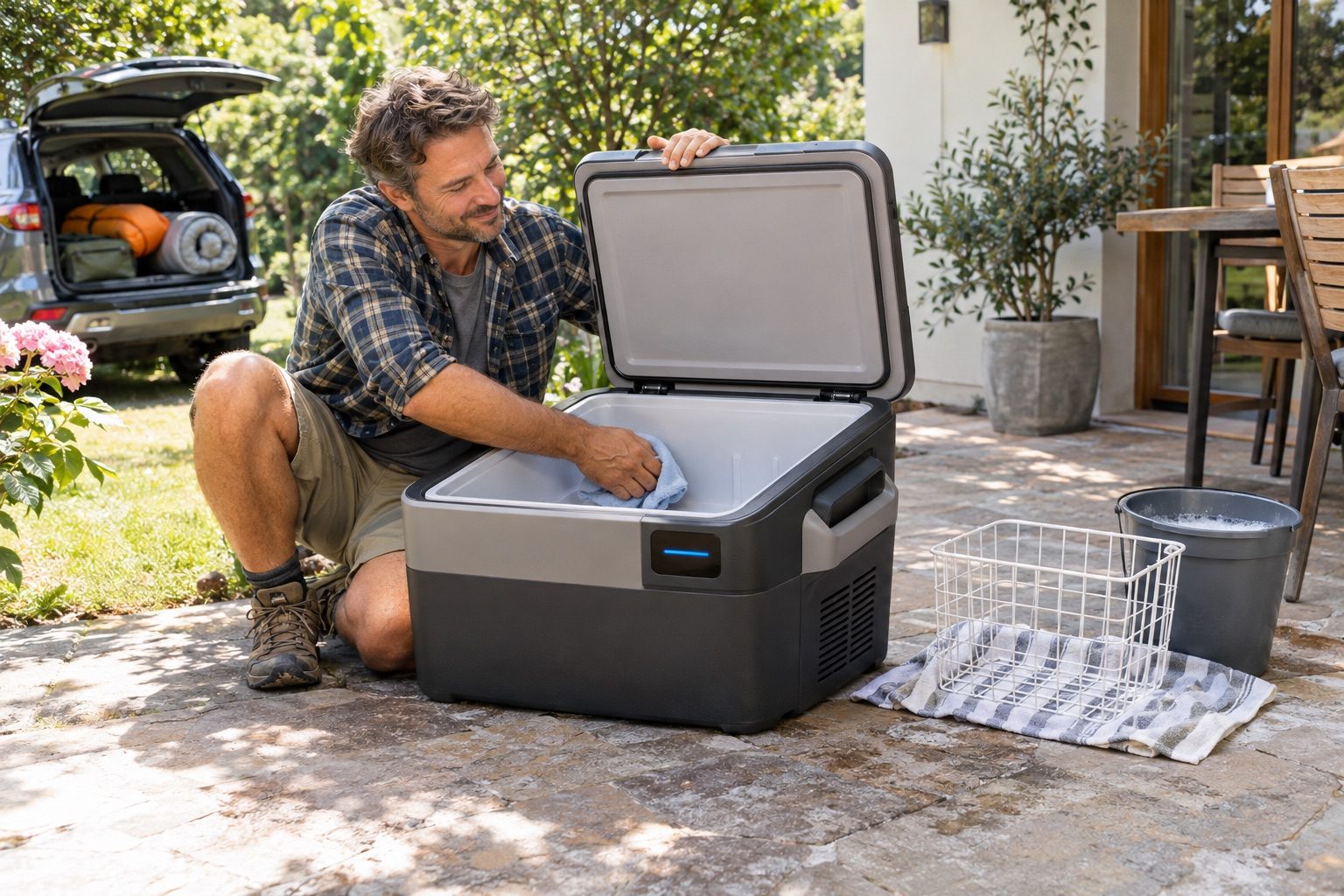 Portable refrigeration
How to clean and store a portable fridge
Build a manual-led routine for emptying, gentle cleaning, drying and inspection between trips.
Read the guide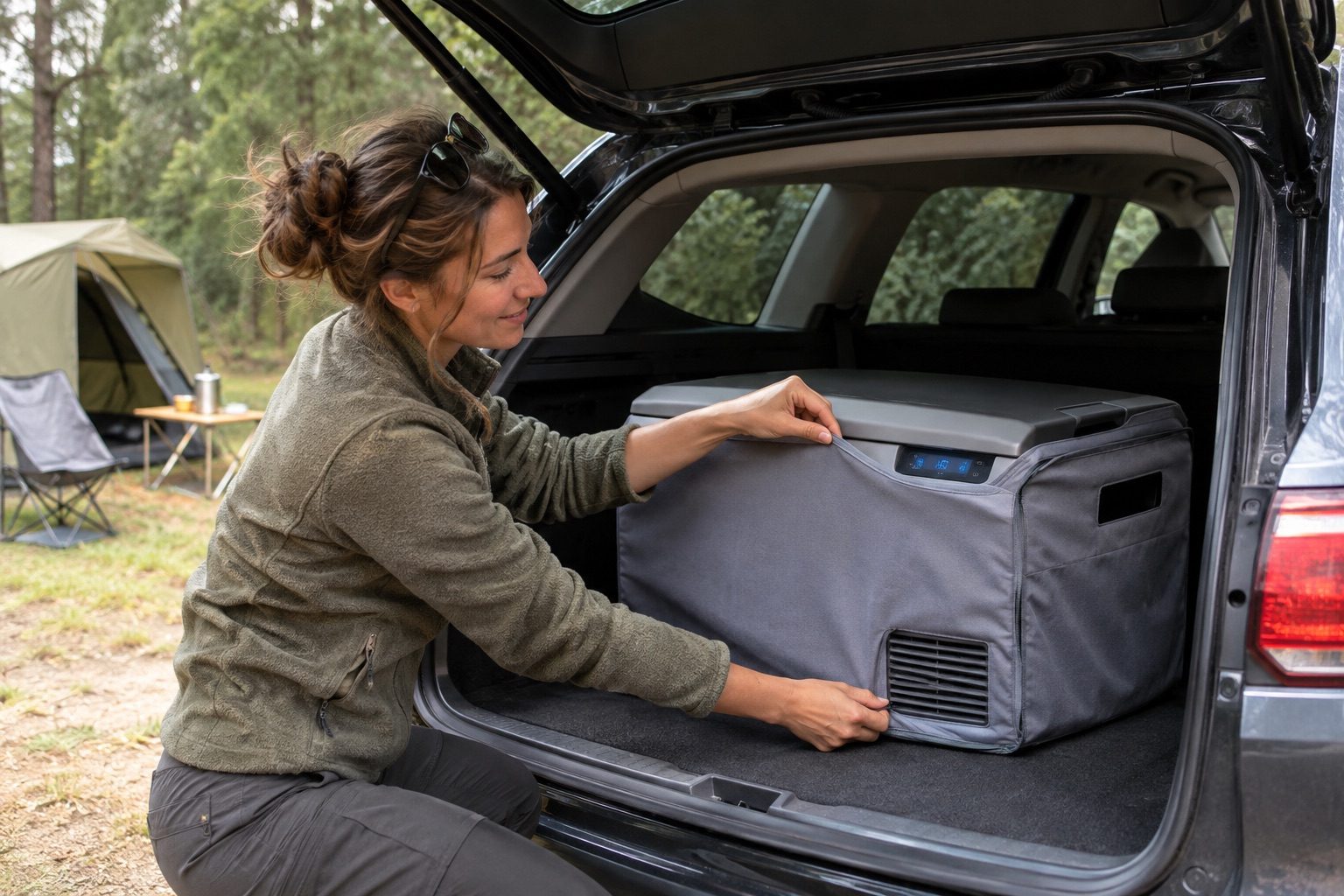 Portable refrigeration
Portable fridge accessories: verify fit before buying
Check cables, covers, slides, baskets and replacement parts against the exact refrigerator model.
Read the guide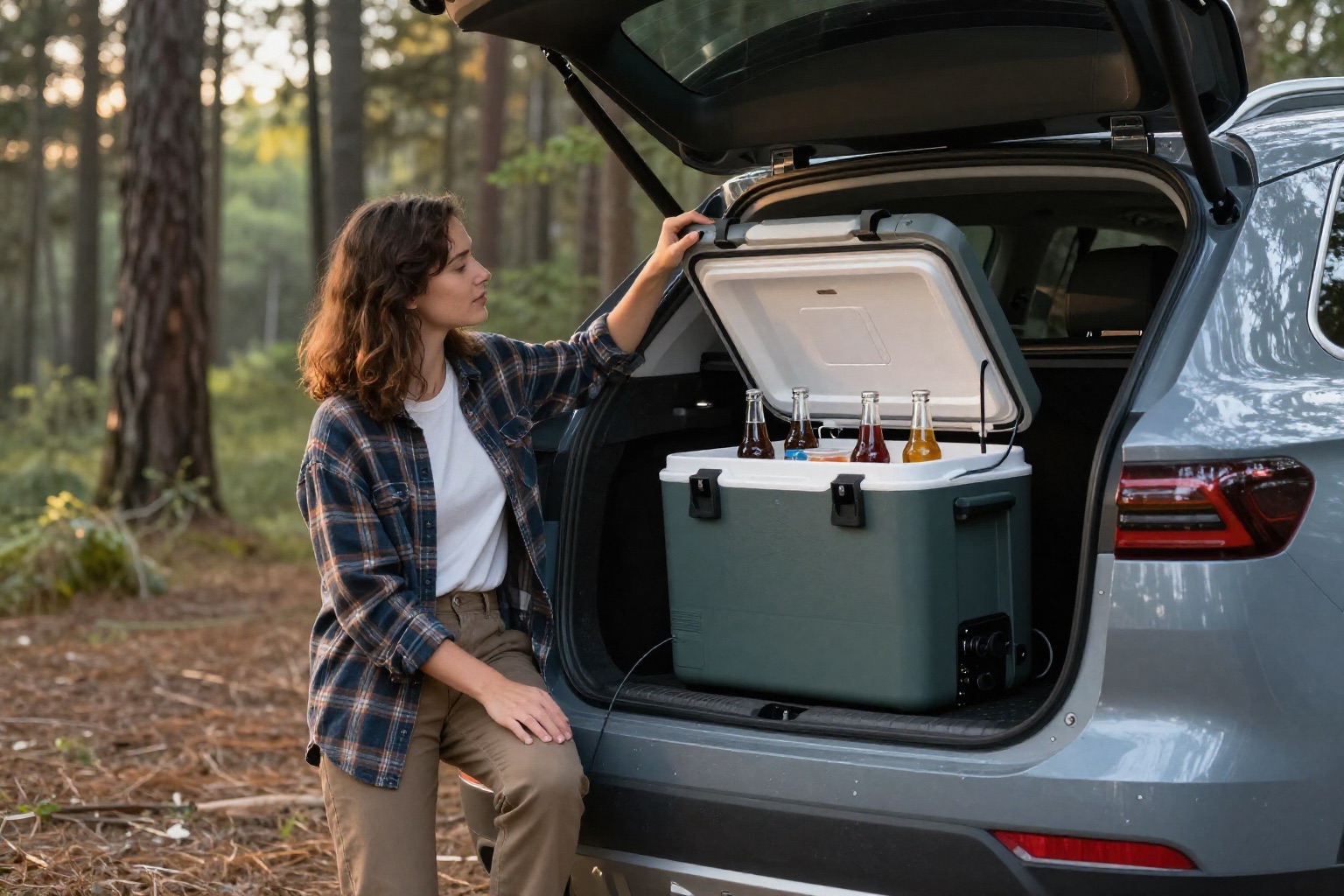 Portable refrigeration
Most efficient 12V fridges: stated power draw and battery runtime
The most efficient 12V fridges by stated power draw: ECO and MAX watts compared, watts per day, and how long a 12V fridge runs on a battery.
Read the guideHow we compare and rate the fridges is explained on How we rate. The rest of the team: Our editors.