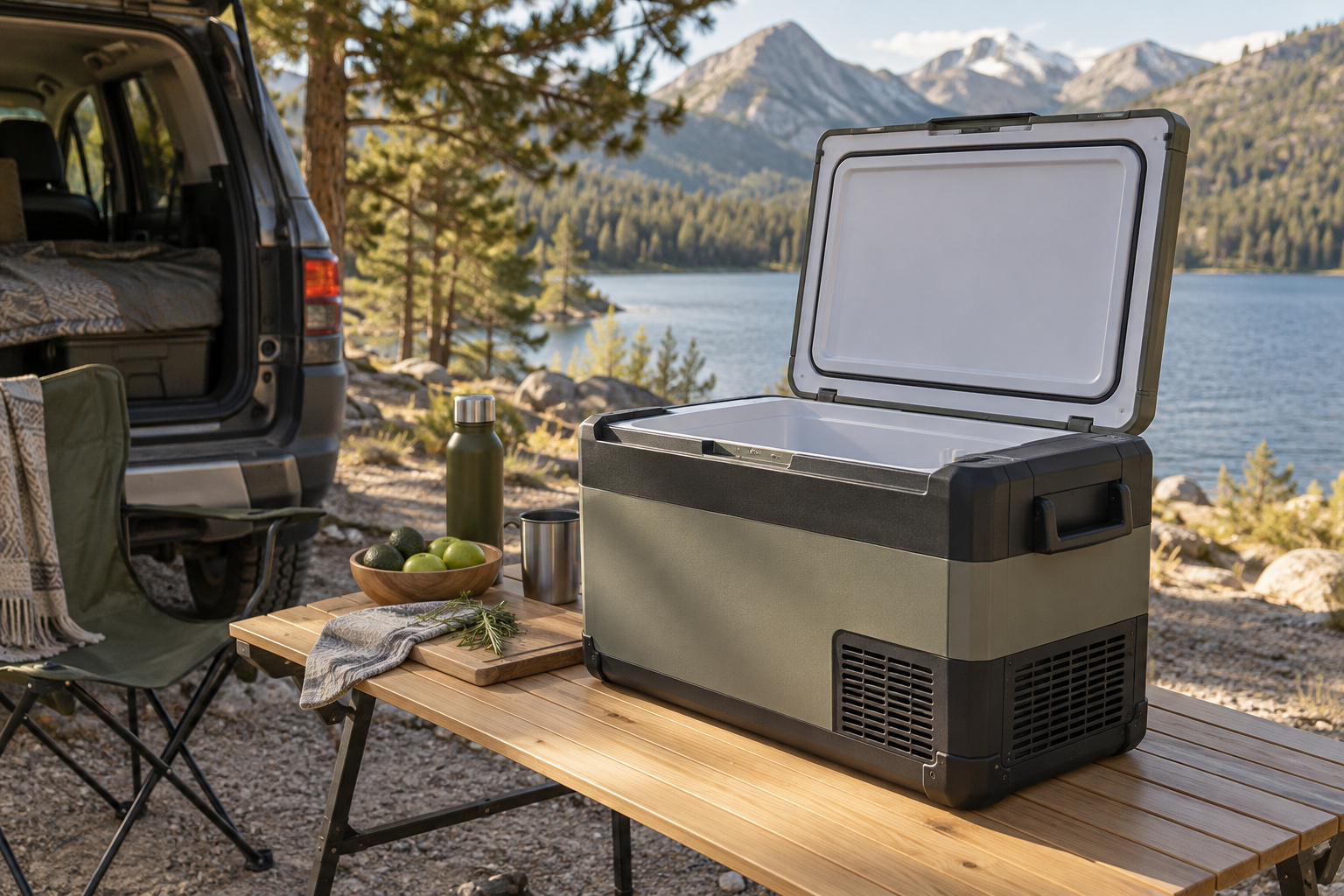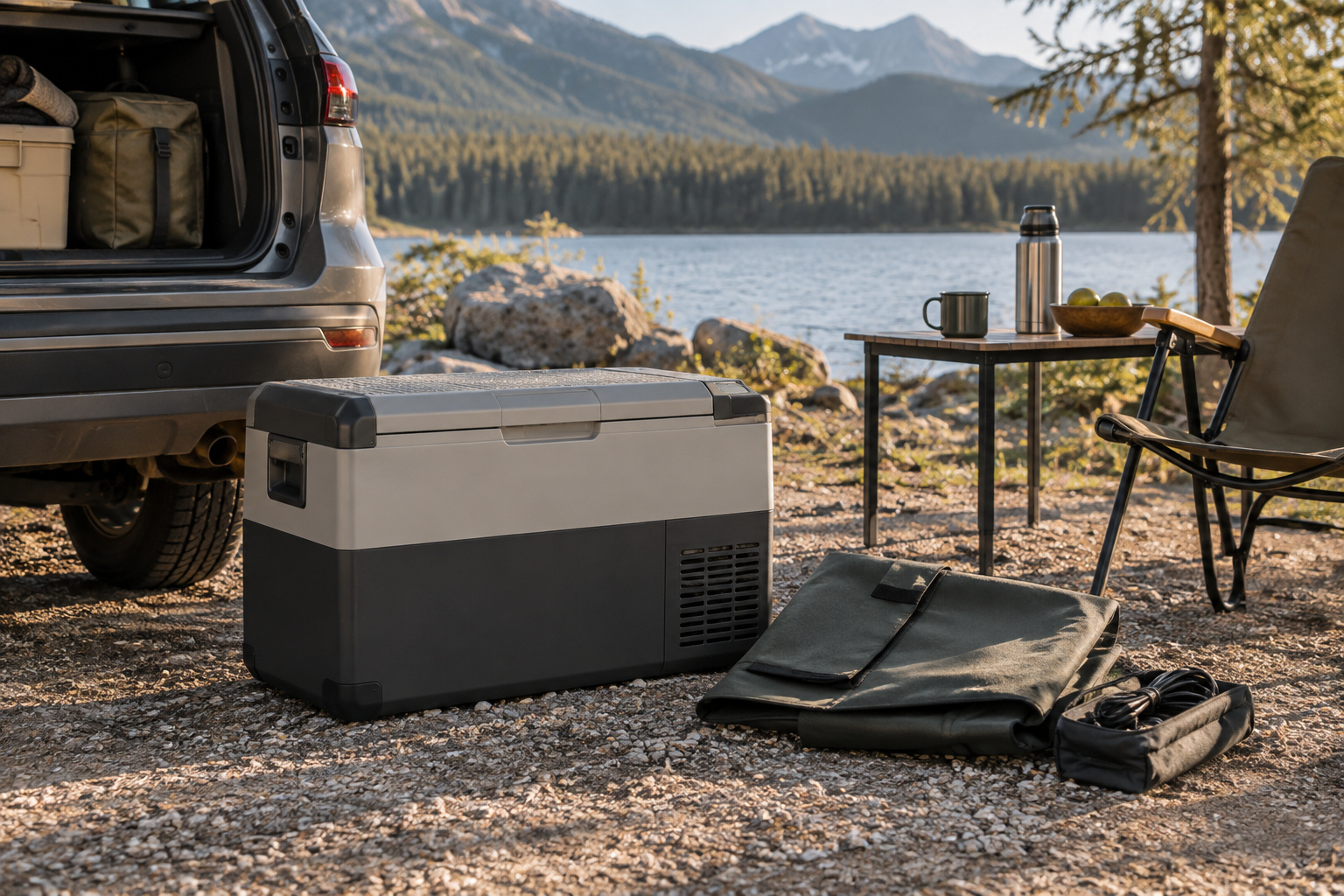
A portable fridge needs more than a rectangle on the cargo floor. It also needs the clearances and conditions specified by its manufacturer, usable access to the lid and a secure arrangement appropriate to the vehicle. Plan those details before choosing a size. Tight packing can turn a convenient refrigerator into a difficult installation even when the published dimensions appear to fit.
Begin with the exact manual
Find the placement and ventilation instructions for your model and region. The reviewed Dometic CFX3 manual specifies a particular clearance and warns against enclosed spaces with inadequate airflow. That is evidence for the models covered by that manual, not a universal clearance for every portable fridge. Use the number and configuration supplied for your own appliance.
Record where air enters and leaves the unit. Do not assume every model vents on the same sides because the cabinet shape looks similar. If a protective cover is proposed, check that it is approved for the exact unit and does not interfere with those openings. A fitted appearance in a product photo is not evidence that the installation has been evaluated for cooling performance.
Source: Dometic CFX3 operating manual.
Measure at the intended position
Measure the actual location with seats, drawers and other permanent equipment in place. Check the narrowest width, the usable depth and the height above the lid. Sloping trim and wheel arches can make a floor measurement misleading. Include handles, hinges, plug projection and cable bends, then add the manufacturer's required open space.
The fit planner performs a simple rectangular comparison using your dimensions. It cannot assess recirculating warm air, structural strength or a complex cabinet shape. Treat a positive result as an initial check, then examine the location physically. If the manual requires asymmetric clearances, using the largest horizontal allowance in the tool is conservative but does not replace the actual installation diagram.
Source: Dometic CFX3 operating manual.
Keep the airflow path clear after packing
A layout that looks open in an empty vehicle may be obstructed once bedding, bags and groceries are added. Identify the space that must remain empty and make it part of the packing plan. Soft bags can shift toward vents during travel, so check the surrounding cargo arrangement as well as the refrigerator itself. Do not use the appliance's exhaust space as spare storage.
Consider the environment at stops, not just while driving. The reviewed manufacturer guidance calls for a ventilated location away from direct heat sources. A cool garage is not representative of every parking situation. We do not claim a specific temperature penalty from poor placement because that would require a defined product and test. The practical rule is to follow the documented conditions and leave clear access for inspection.
Source: Dometic CFX3 operating manual.
Check lids, slides and everyday access
Open the lid through its intended movement and imagine reaching the lowest container. Verify clearance to the vehicle roof, hatch and neighboring furniture. If a slide is used, include its fully extended position and supported load requirements. A slide may improve access, but it adds another component whose mounting and compatibility need separate evidence.
Read the accessory guide before buying mounts or slides. Do not assume a similar footprint means the base attachment points match. Avoid improvising holes in the appliance or relying on carrying handles as approved tie-down points without manufacturer support. Safe securement depends on the vehicle and hardware as well as the refrigerator; this article does not certify a crash-safe installation.
Source: Dometic CFX3 operating manual.
Route power without creating interference
Find a cable path that remains accessible and does not cross a pinch point. Check the lid, slide, hatch and seat movement with the cable in its intended route. The connector must not be forced against adjacent cargo. Keep electrical connections protected from the conditions the manual excludes, and avoid arrangements that require pulling on the cable to disconnect the appliance.
The power guide covers source and cable questions. Placement and power should be planned together, because a convenient position is not useful if it depends on an unsupported extension or a socket that stops supplying power unexpectedly. Confirm the vehicle outlet behavior and the appliance instructions before packing perishable food for a long stop.
Source: Dometic CFX3 operating manual.
Recheck the loaded setup
After loading the vehicle, revisit the installation from the user's perspective. Can you see the controls, inspect the cord, open the lid and retrieve a meal without moving safety-critical cargo? Are the ventilation openings still clear? Can the refrigerator be emptied and cleaned after the trip? These are owner checks to perform with your equipment, not tests conducted by this site.
Revisit them whenever you change the surrounding storage layout or add an accessory. A new cover, drawer or larger bag can alter the original assumptions. Pair the placement plan with the food-temperature routine; suitable airflow supports operation but does not prove the food has remained safely cold. Good placement is a documented, usable arrangement that continues to work after the rest of the trip is packed around it.
Source: Dometic CFX3 operating manual.